Overview
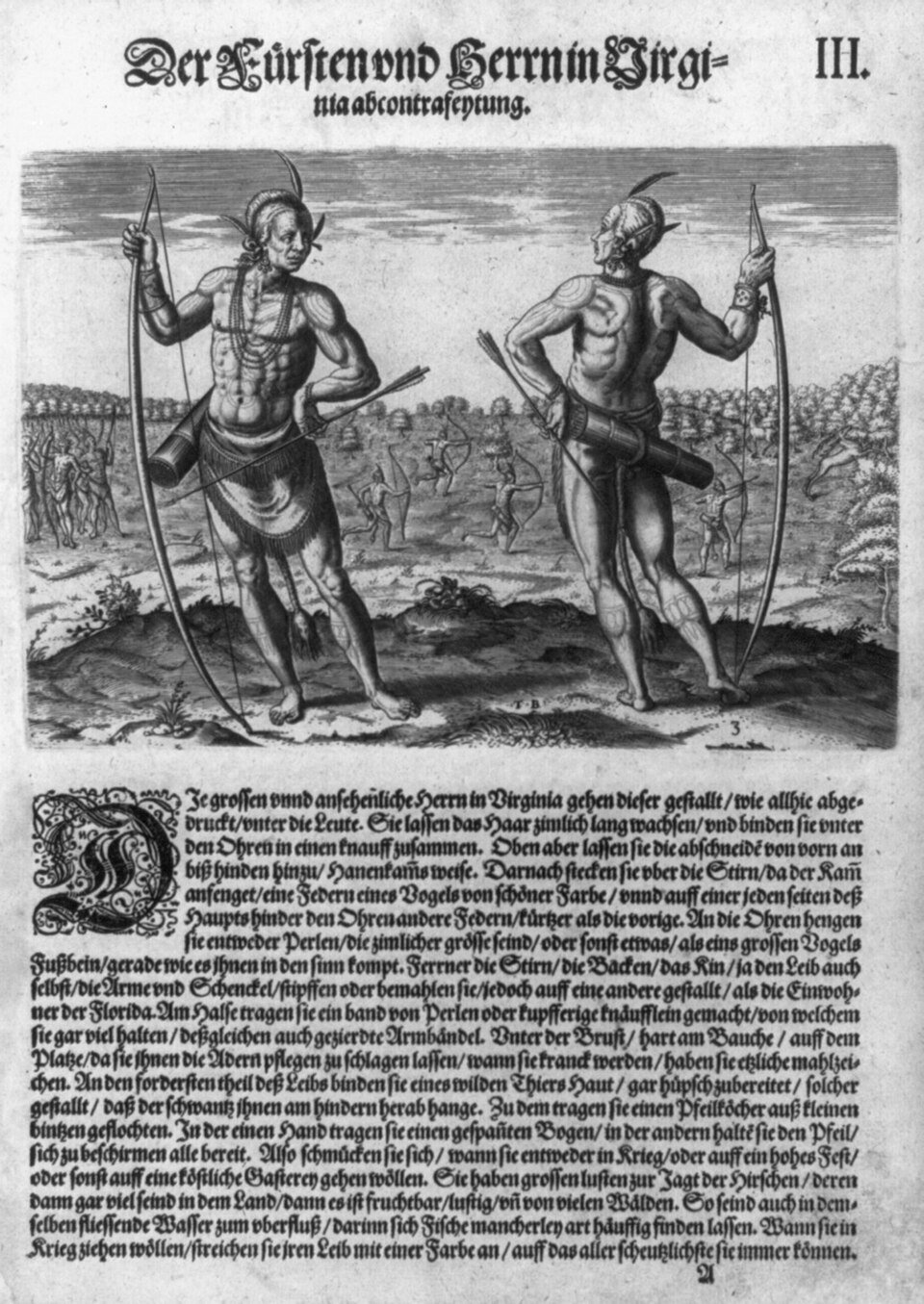
Contact changed Indigenous dress faster than it changed European dress, and mostly through materials rather than forms. Europeans arrived in doublets, hose and steel; what crossed into Native wardrobes was not the doublet but the bead, the blade and the bolt of wool — new media taken up inside existing traditions.
Key garments and style
The Europeans wore what their century wore: fitted doublet and hose, later coats and breeches, with the cuirass and open-faced morion helmet of Spanish and early colonial soldiers.
The consequential exchange ran the other way round in a different currency. Glass beads, mostly Venetian, arrived in quantity and were worked into decoration that had previously used dyed porcupine quill — a change of medium so complete that beadwork is now read as traditional, though the beads are an import. Wool trade cloth in dense weaves took the place of hide for leggings, breechcloths and blanket-robes; copper and brass kettles were cut up for tinkling cones and pendants; and silver was worked into brooches and armbands.
None of this happened in a healthy society. Epidemics that preceded the traders in many regions removed the specialists who held craft knowledge, so change in dress is entangled with catastrophic loss.
Transition
Through the colonial centuries these borrowed materials settled into recognised regional styles, and clothing became one of the fields on which missions, treaties and rationing tried to make Indigenous people look European.