Overview
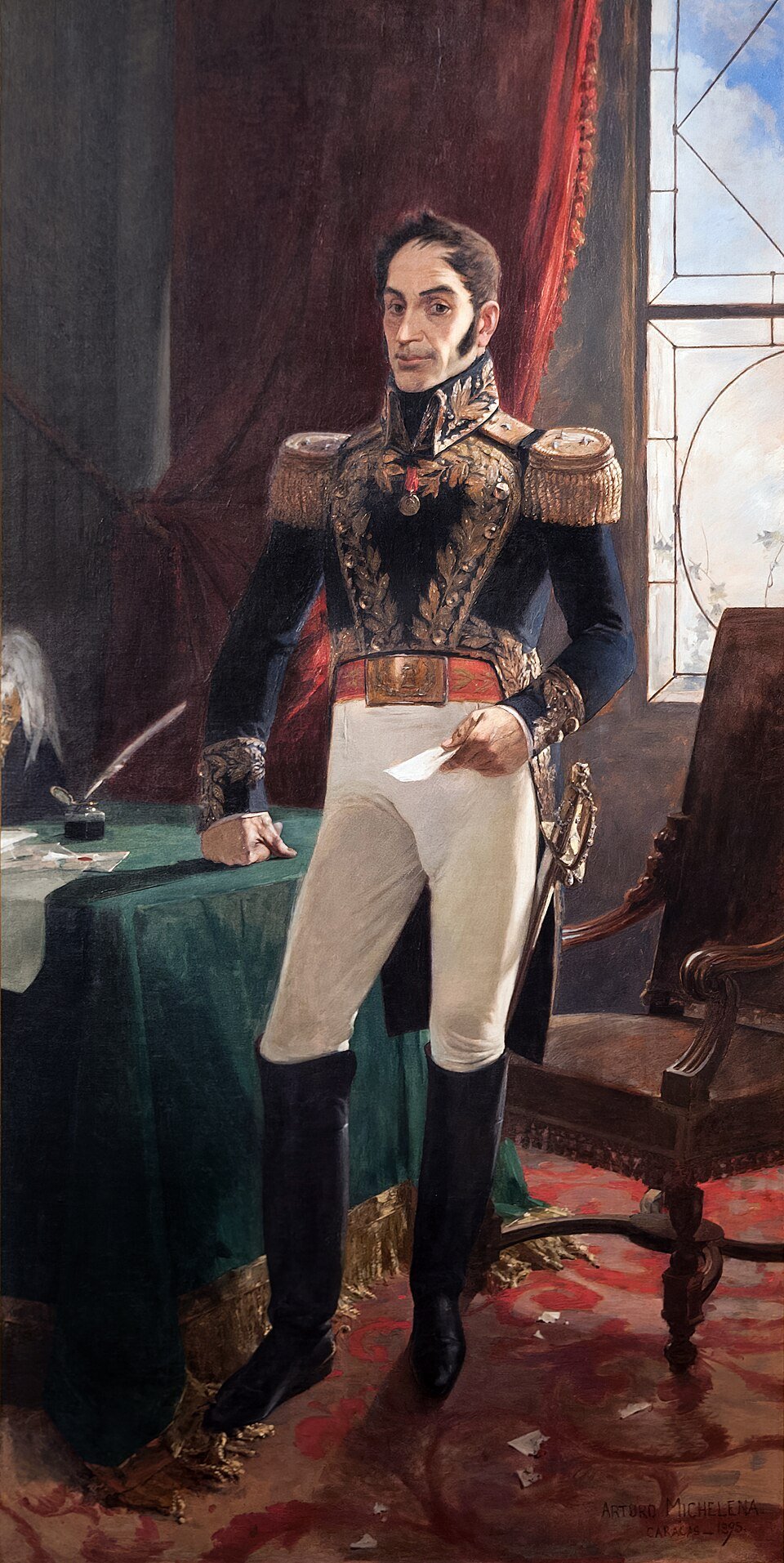
Independence dressed its leaders as Europeans and its countryside as itself. The new republics adopted Napoleonic military tailoring and Paris civilian fashion almost without alteration, while on the plains a working costume was taking shape that would later be claimed as national dress by the same states.
Key garments and style
Officers wore high-collared tailcoats with heavy gold lace, bicorne or shako, and sashes, in a style borrowed from the armies of the Napoleonic wars; civilian elites followed Paris and London, with the tailcoat and later the frock coat for men and Empire then Romantic silhouettes for women.
The gaucho of the pampas wore something entirely separate: a poncho, a wide woven faja at the waist with a leather tirador over it, boots, and beneath, in this period, the chiripá — a cloth passed between the legs and secured at the waist. The bombachas now inseparable from the gaucho image are later, spreading in the second half of the century, so the classic outfit assembled over time rather than arriving whole.
Andean and Mapuche communities continued weaving their own dress throughout, largely untouched by the political change.
Transition
Through the nineteenth century Western dress became the urban norm, and the gaucho and Andean wardrobes were reinterpreted as national heritage rather than as working clothes.