Overview
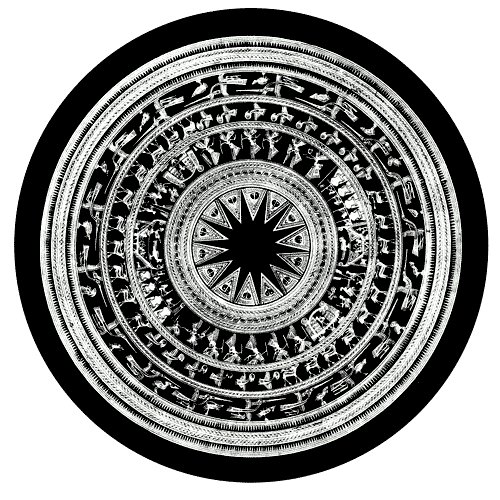
Early Vietnamese dress is known almost entirely from bronze. The Dong Son culture of the Red River valley cast large ceremonial drums whose surfaces carry processions of human figures, and those figures — tiny, stylised and repeated — are the evidence. Nothing woven survives, so what can be described is a silhouette rather than a garment.
Key garments and style
The figures wear a wrapped lower cloth: a skirt for women, a narrower loincloth for men, with the upper body bare or crossed by a band of cloth. Bronze and stone ornaments, ear discs and bracelets appear in burials. Climate explains the shape of all of it — this is dress for a hot, wet delta where people worked in water.
The conspicuous feature is the headdress. Drum figures wear tall plumes and what look like feather cloaks, and they are shown in procession, in boats and beating drums, so the safest reading is that this is ceremonial costume rather than daily wear. Chinese sources of the following centuries record tattooing among the peoples of the region, said to protect against creatures in the water.
One caution about names. The breast cloth is often called the yếm, but that word belongs to later Vietnamese dress; using it here projects a named garment onto figures a few centimetres high. The practice is old, the name is not evidence.
Transition
Han expansion in 111 BC brought Chinese cloth, sericulture and a sinicised official wardrobe into the region, and the split between court dress and village dress opens.