Overview
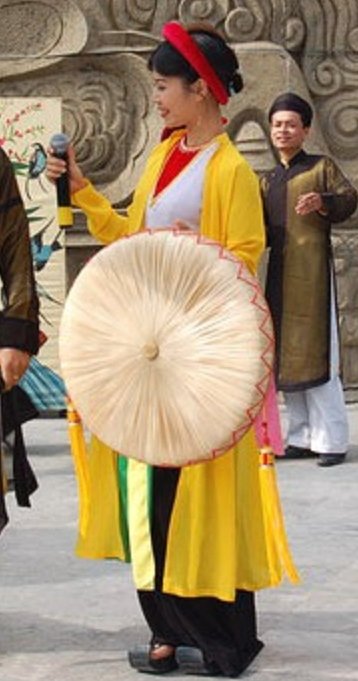
An áo tứ thân is made of four lengths of cloth: a seamed back and two front panels that hang free and are usually tied together at the waist, worn open over a bright yếm halter and a long skirt or trousers. Dark, plain cloth was everyday; layered colours marked festival dress.
How it is worn
It is put on over the yếm and skirt and its front flaps knotted at the waist or left to hang, finished with a wide cloth belt, a flat quai thao hat, and a turban-wound scarf. The whole is the costume of the quan họ folk singers and of the northern delta villages.
History
The áo tứ thân took shape in the Lê-period north and was the ordinary and festival dress of countrywomen there into the twentieth century, when it gave way to the fitted áo dài. It survives as folk and stage costume and a symbol of the northern village.