Overview
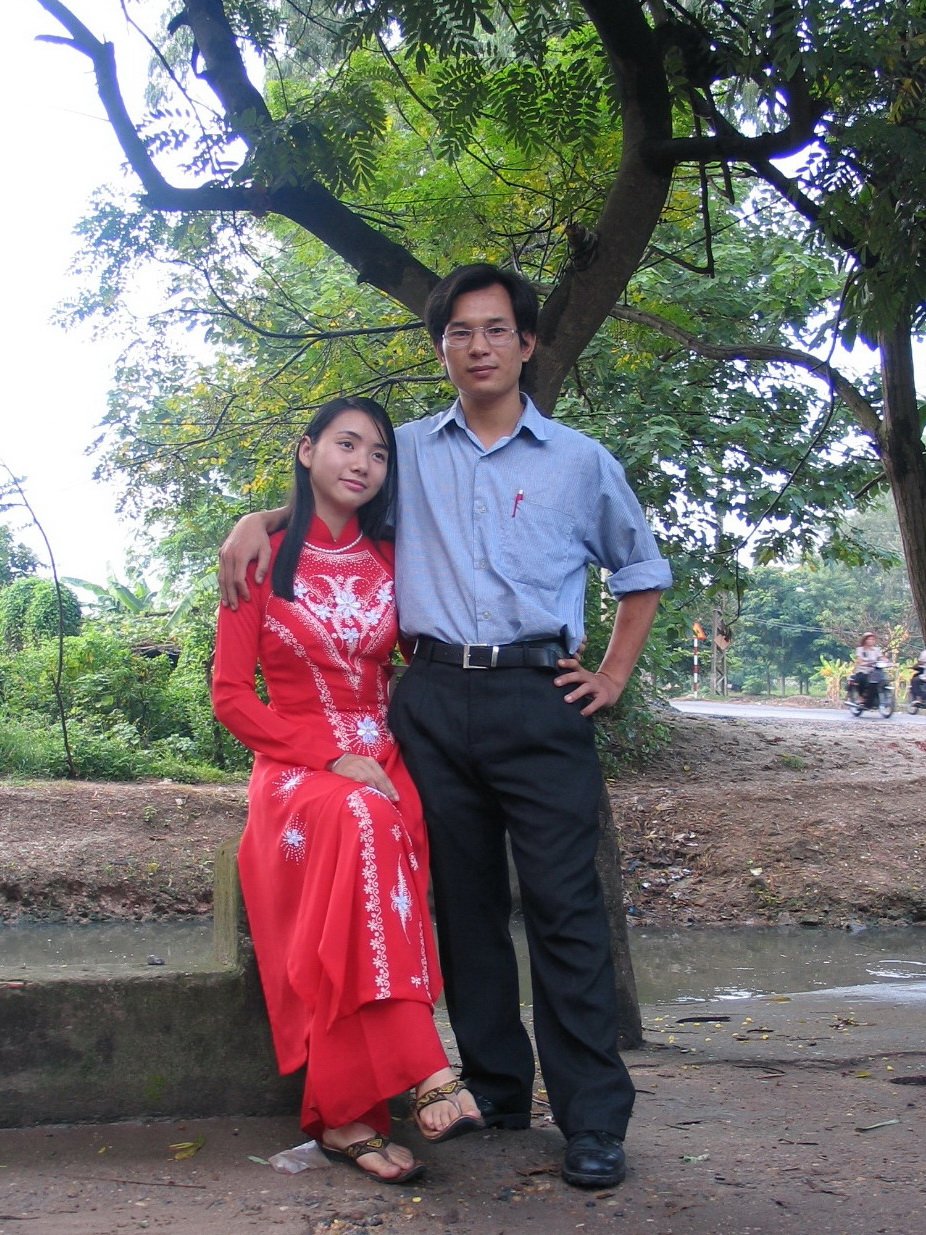
An áo dài is a high-collared tunic of light silk or synthetic cloth, fitted to the body and slit up both sides to the waist so the long front and back panels float over loose, flowing trousers. It covers the whole body yet moves with the wearer, elegant and cool in the heat.
How it is worn
It is buttoned along one side and worn over matching or contrasting trousers, plain white for schoolgirls, coloured and patterned for work and celebration, and richly worked for weddings. Its cut flatters and conceals at once, and it is worn by women daily and by men on formal occasions.
History
The modern áo dài was created in the 1930s when designers such as Cát Tường (Le Mur) reshaped the Nguyễn five-panel robe into a fitted two-panel dress. Through changing fashions it has remained the emblem of Vietnamese women and the country’s dress before the world.