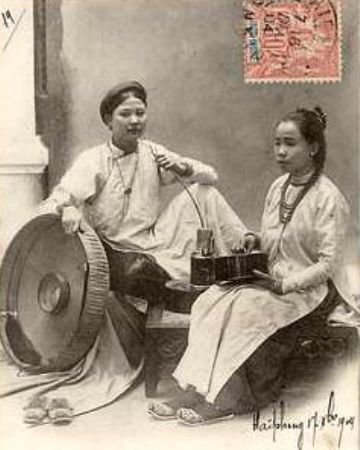
Overview
An áo ngũ thân has five panels — two front, two back, and a small hidden fifth flap under the front — sewn into a robe that buttons up the right side and stands with a small collar. Closed and tidy rather than open and tied, it reads as more formal and modest than the four-panel dress.
How it is worn
It is buttoned along the right side over trousers and worn with a headscarf or the khăn xếp turban for men, its length reaching below the knee. The number of panels and the modest closed cut carried a Confucian sense of propriety promoted by the Nguyễn court.
History
The áo ngũ thân was made standard by the Nguyễn lords and dynasty from the eighteenth century, unifying dress across their realm, and in the 1930s designers slimmed it into the two-panel áo dài. It has returned in Vietnam’s revival of traditional dress.