What it was
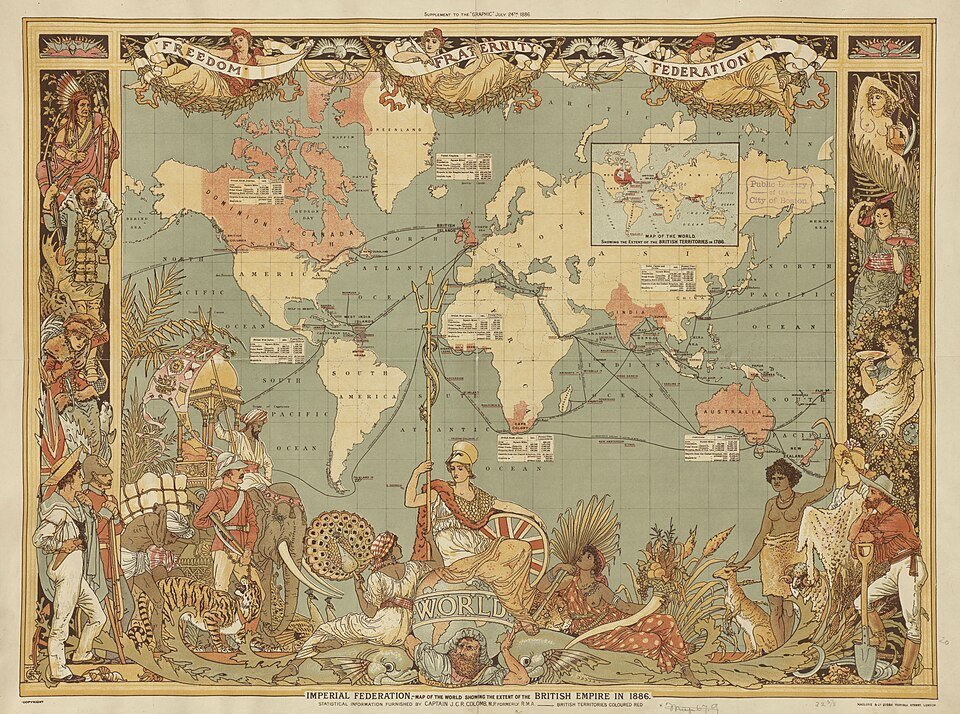
Built first on Atlantic trade and settlement, then on company rule in India and nineteenth-century expansion in Africa and the Pacific, the empire was governed as a patchwork of colonies, protectorates, and dominions. It rested on naval power and trade — including, until abolition, the Atlantic slave trade: historians estimate that British ships carried roughly three million enslaved Africans. Britain outlawed the trade in 1807 and slavery in most of the empire in 1833, compensating owners, not the enslaved.
Role
Its record is deeply contested. Imperial rule brought railways, common law, and the English language, but also conquest and coerced labor; famines under British administration — in Ireland (1845–1852, about one million dead) and repeatedly in India, including Bengal in 1943 (estimates around two to three million dead) — are attributed by many historians in large part to policy failure; colonial violence included the Amritsar massacre of 1919 (379 dead by official count, more by Indian estimates) and the suppression of the Mau Mau rising in 1950s Kenya.
Fate
The world wars exhausted the imperial center: India and Pakistan became independent in 1947 amid Partition violence whose death toll is estimated in the hundreds of thousands to about a million, African colonies followed from the late 1950s, and the 1997 handover of Hong Kong is taken as the conventional end. The Commonwealth, English common law, and the empire’s contested memory are its principal legacies.