Overview
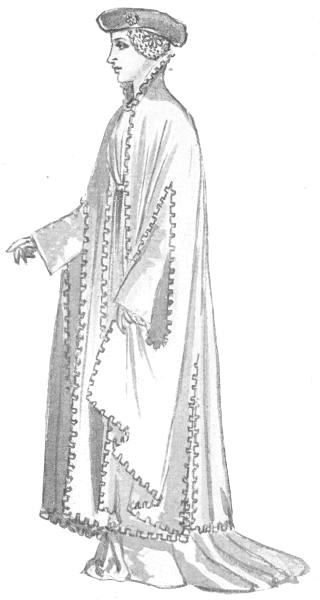
A houppelande is a full over-gown falling from a high collar or the shoulders in organ-pipe folds, belted high for women and worn at various lengths by men. Its enormous sleeves — bag-shaped or trailing to the floor and often cut into scalloped dagges — made it the showpiece of courtly extravagance.
How it is worn
It is put on over the cotehardie or doublet and gathered in with a belt worn high under the bust or at the waist, the excess cloth arranged into regular vertical folds. Fur linings and edgings signalled wealth, and the long sleeves made manual work impossible, which was rather the point.
History
The houppelande appeared around 1360 and dominated aristocratic dress into the fifteenth century, the height of the International Gothic court fashion pictured in the Très Riches Heures. It slowly gave way to the more fitted Burgundian and Tudor gowns as sleeves tamed and waists dropped.