Overview
Two wars and the decades between them stripped British dress down. The corseted Edwardian silhouette went, skirts rose, menswear settled into the lounge suit, and in the Second World War the state took direct control of what could be made — the most thorough government intervention in British clothing there has ever been.
Key garments and style
The Edwardian S-bend corset and enormous hats disappeared during and after the First World War, as women entered war work and needed clothes that allowed it. The 1920s produced the dropped waist, the shortest skirts yet worn, and cropped hair.
The Second World War brought rationing by coupon from 1941 and the Utility scheme, marked CC41, the following year. Utility clothing was made to controlled specifications from controlled cloth, and austerity regulations capped the number of pleats, pockets, buttons and the depth of hems — so wartime garments are identifiable by what they lack. Leading couturiers were commissioned to design Utility ranges, which put good design into mass-produced clothes for the first time.
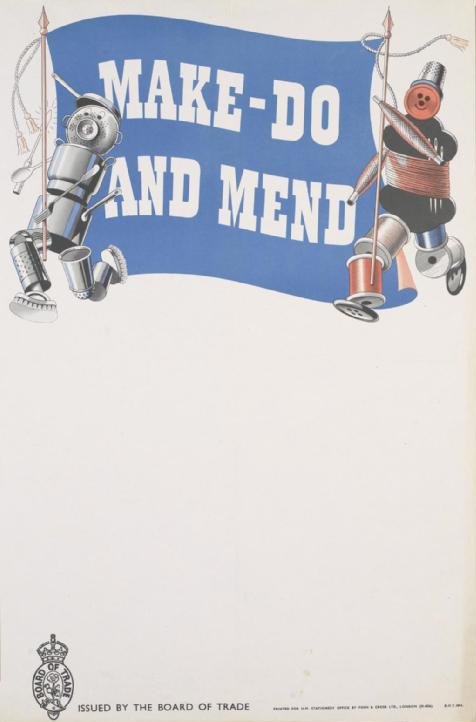
Make do and mend, the government’s mending campaign, is the period’s other legacy, and it survived the war as a habit in households that had learned it.
Transition
Dior’s New Look of 1947, with its extravagant use of cloth, was a direct repudiation of all this, and rationing did not end in Britain until 1949.