What happened
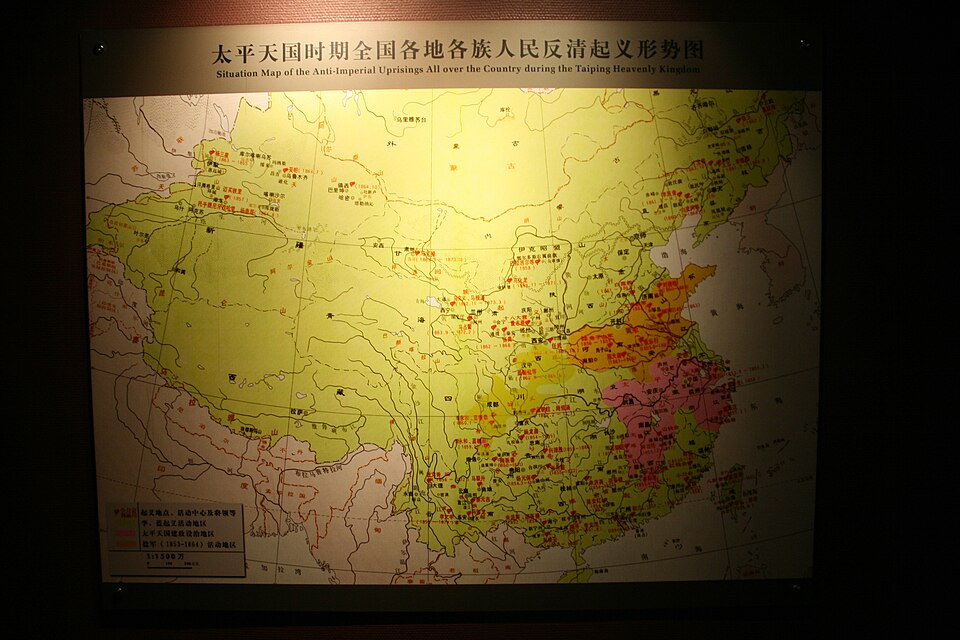
The rising began at Jintian in Guangxi in 1851, and in 1853 the Taiping took Nanjing, renaming it the Heavenly Capital of the Taiping Heavenly Kingdom. It was defeated not by the dynasty’s banner armies but by new provincial gentry forces — Zeng Guofan’s Xiang Army and Li Hongzhang’s Huai Army, assisted by the foreign-officered “Ever-Victorious Army” — until the Heavenly Capital was retaken in July 1864.
Background
Hong Xiuquan, a failed examination candidate who after visions proclaimed himself the younger brother of Jesus, founded the God-Worshipping Society in Guangxi. The Taiping program called for communal property, land equalization, and bans on opium and footbinding; in practice the movement was a theocracy that turned murderous within, in the Tianjing incident purges of 1856.
Consequences
The war left the lower Yangtze region catastrophically devastated. The regional Han Chinese armies and governors that defeated the Taiping permanently shifted power away from the Qing center.