Overview
The Republic swept away the Qing dress code and had to decide what Chinese people should wear instead. What emerged in the following three decades — the qipao for women, the Zhongshan suit or a Western suit for men — was worked out largely in Shanghai, in a commercial culture of department stores, magazines, calendar posters and film.
Key garments and style
The qipao changed shape within a decade. The 1920s version is loose and straight, worn with a high collar; by the mid-1930s it is cut close to the body, the hem long and the side slit high, and it is this Shanghai form that is now meant by the word. Its ancestry is argued over — whether it descends from the Manchu banner gown or was a new garment given an old name — and the argument is itself part of the period, since the garment had to be both modern and Chinese.
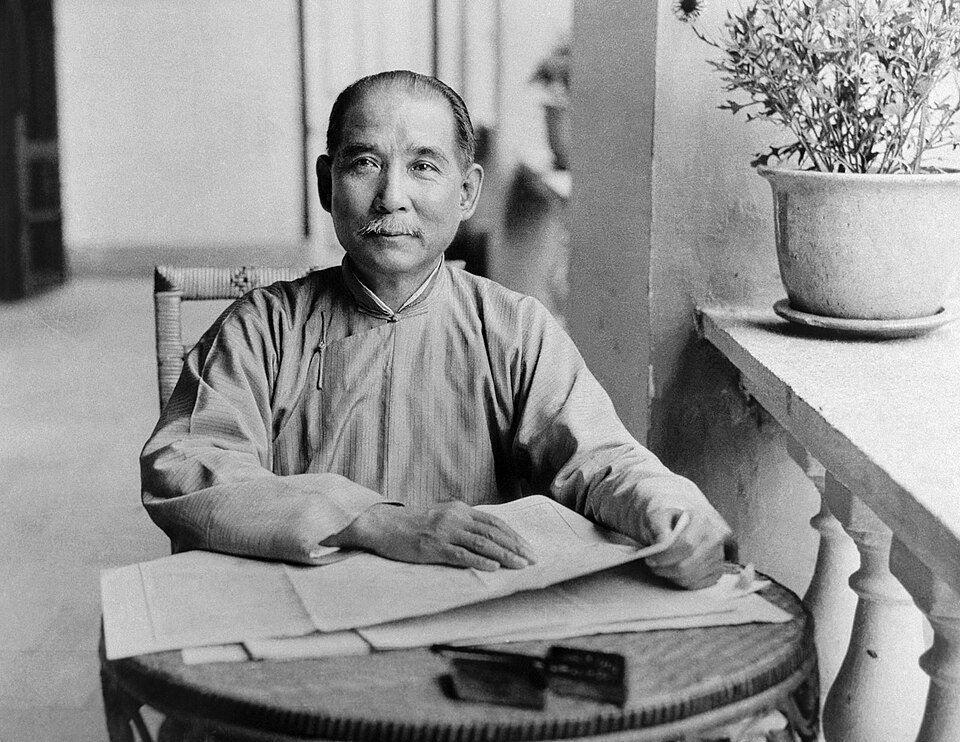
Men had two modern options. The Western suit carried the treaty-port world; the Zhongshan suit, with its four pockets and turned-down collar and associated with Sun Yat-sen, offered a national alternative that was neither Qing nor foreign.
Students and educated women adopted a plain jacket-and-skirt of their own, and the queue, cut after 1911, disappeared as a marker of the old order.
Transition
The People’s Republic replaced all of it with plain utilitarian dress, and the qipao survived in Hong Kong, Taiwan and the diaspora before returning as formal wear.