Overview
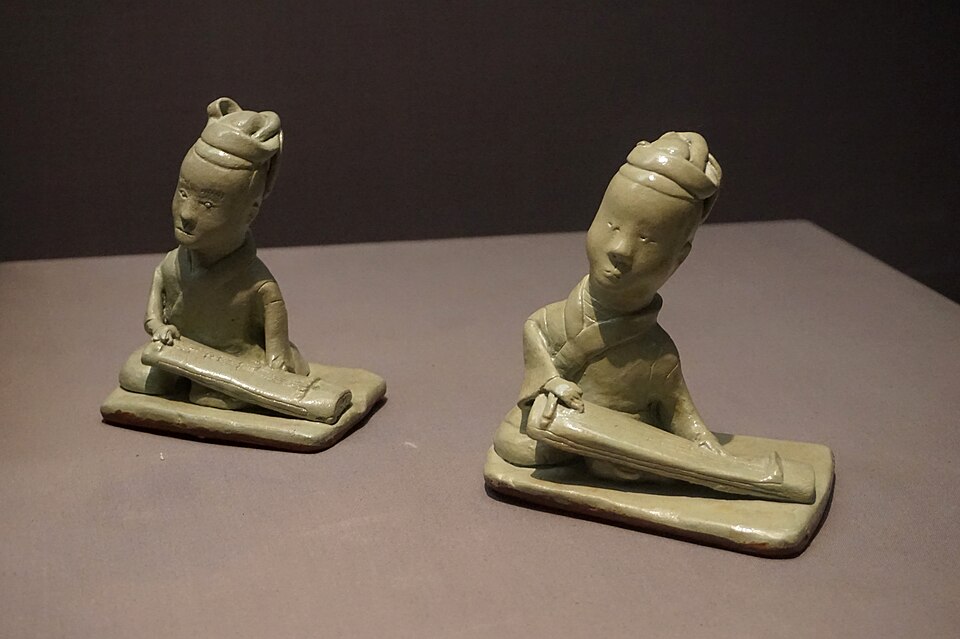
The Han court had graded dress by rank down to the colour of a seal-ribbon, and the collapse of the Han took the enforcement with it while leaving the shapes in place. The robe is still the shenyi tradition — a long garment wrapped across the body and belted, the right panel underneath — and the difference between a general, a governor and a retired scholar is largely in fabric, sleeve width, and what sits on the head. Painted tomb bricks and the figurines from Wei and Wu tombs show the same silhouette on men of very different standing.
How it is worn
The robe crosses right over the chest and is held by a sash at the waist, so nothing fastens and everything depends on the belt. Wide sleeves hang well below the hand and have to be gathered back to do anything, which is exactly their point in a man who does not work with his hands; soldiers and labourers wear the same robe cut narrow, or a short jacket and trousers. Hair is bound into a topknot and covered — with a lacquered cap by those in office, with a plain cloth wrap by those making a point of not being.
History
The period matters less for invention than for loosening. The cap of office lost its monopoly to the headscarf, the wide sleeve became a statement rather than a uniform, and the Wei court’s own sumptuary revivals were repeatedly issued and repeatedly ignored. When the Jin reunified the country the wardrobe it inherited was recognisably Han, and the habits around it were not.