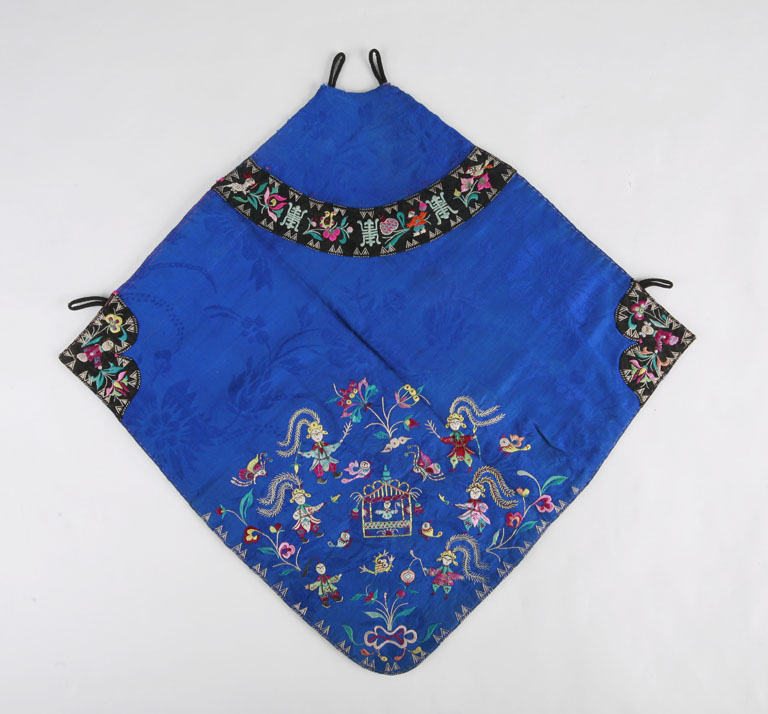
Overview
It is a single piece, usually a rhombus or a rounded square, cut so one corner is trimmed for the neck cord and the two side corners take the waist cords. The back is bare, which is the point: it covers the belly, which Chinese medicine holds must be kept warm, and leaves the back free in summer heat. Adult versions were silk and often embroidered with lotus, fish or a child, and a pocket at the belly could hold herbs.
How it is worn
The neck cord goes over the head, the waist cords cross behind and tie at the front or the side, and it is worn directly against the skin under the outer clothes. Tightness is not the aim — it is meant to lie flat over the stomach rather than to shape the body, which is the difference between it and the corsetry it is sometimes compared to. On a baby it is often worn alone in summer, and that is the use most people alive have seen.
History
Chest-and-belly cloths run back through the Song and earlier under other names, and the dudou proper is Ming and Qing underwear for women, children and often men. The Republic period replaced it with Western undergarments in the cities, and it went first to the countryside and then to infants. It returned as outerwear twice: on the Chinese stage, and in 1990s and 2000s fashion, which is why the word now reads as a look rather than as underwear.