Overview
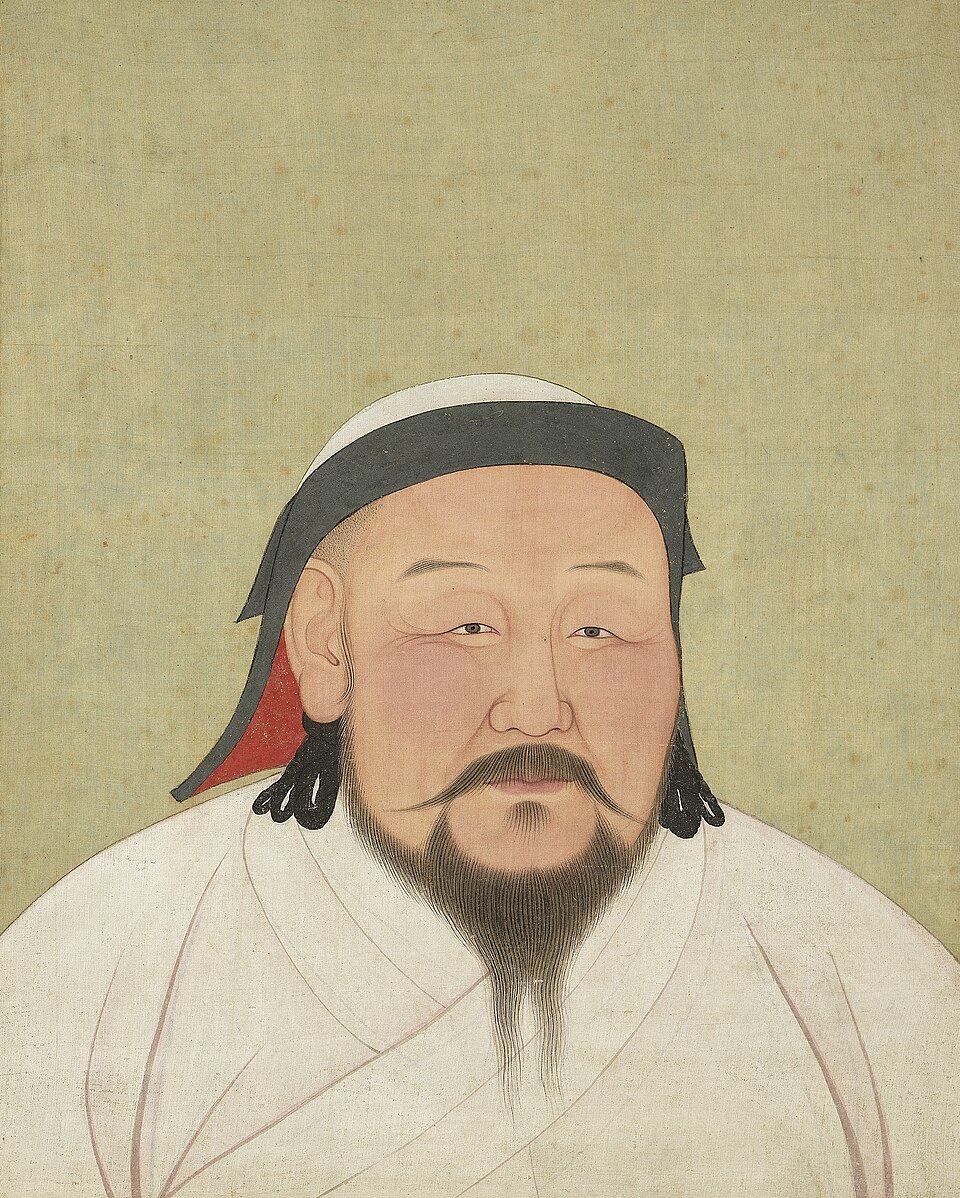
Yuan dress is two wardrobes in one empire, kept deliberately apart. The Mongol ruling class wore steppe clothing and went on wearing it; the Han majority kept the cross-collar robes they had worn under the Song. Unlike most Chinese dynastic transitions this was not a change of fashion but a division of it, and the boundary was a legal and social one as much as a matter of taste.
Key garments and style
The Mongol garment is cut for riding: a robe crossing at the front with narrow sleeves, belted, worn over trousers and boots. Its court form is the jisun, the banquet robe granted by the emperor, in which every guest wore the same colour on the same day — a display of the ruler’s ability to clothe a whole hall at once, and repeated over many days in different colours. Noblewomen wore the boqta, called the gugu in Chinese sources — the tall bark-and-silk headdress that European travellers found so remarkable, standing well above the head and trimmed with feathers.
The prized fabric was nasij, cloth of gold woven with a heavy gold-wrapped thread. The Mongols moved weavers across the empire to make it, resettling craftsmen from Central Asia and Persia in workshops in the north, so Yuan textiles carry Islamic patterning executed in Chinese workshops.
Transition
The Ming founder made the restoration of Han dress an explicit act of state, banning Mongol clothing, names and speech — one of the clearest cases anywhere of a government legislating what its people should wear in order to say who they now were.