Overview
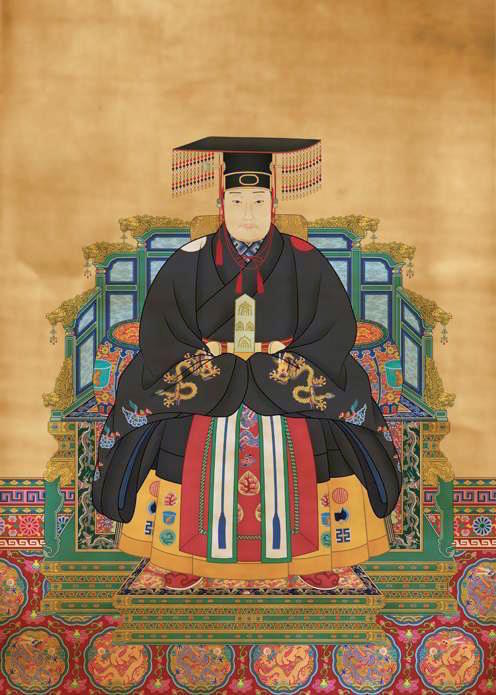
The set is a black upper garment and a red lower skirt, carrying the Twelve Ornaments — sun, moon, stars, mountain, dragon, pheasant, sacrificial cups, waterweed, flame, grain, axe and the fu symbol — of which the emperor alone wore all twelve and lesser ranks wore fewer. The crown is a flat rectangular board tilted forward over a cap, with twelve strands of jade beads, the liu, hanging front and back. A jade pendant, red knee-cover and sash complete it.
How it is worn
It is worn only for sacrifice and the greatest court rites, put on with attendants and moved in slowly, because the hanging beads swing and strike if the head turns quickly. That is deliberate: the classical explanation is that the beads block the ruler’s side vision and the cap’s ear-plugs block casual speech, so the dress itself enforces the composure the rite requires. Everything about it is prescription rather than taste.
History
The mianfu is codified in the Zhou ritual texts, and every later dynasty rewrote its details while keeping the board crown and the Twelve Ornaments — which is why it is a Zhou garment worn in the Ming. Korea, Japan and Vietnam adopted it for their own rulers with the bead count reduced to mark subordinate rank. The Qing abandoned it, ending three thousand years, and it is now seen in reconstruction, museum display and the Japanese enthronement rite.