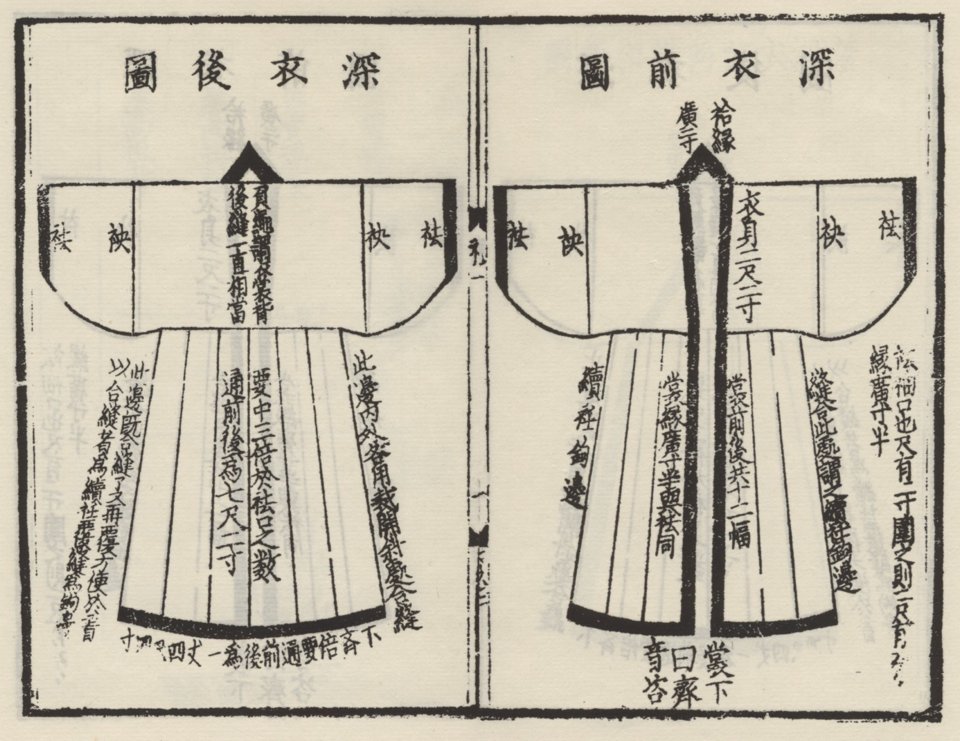
Overview
A shenyi (deep robe) is cut as a bodice and a skirt that are sewn together at the waist so the body is deeply wrapped, which gives the garment its name. The Book of Rites set out its proportions as a matter of propriety, and it split into a curved-hem form (quju) and a straight-hem form (zhiju).
How it is worn
The robe crosses left over right and is closed with a sash, and the skirt panels wrap around the body; in the curved-hem version a triangular flap winds across the front and tucks at the side. It was worn by educated men and women as everyday and semi-formal dress.
History
The shenyi took shape in the Eastern Zhou and Warring States centuries and is described in Han ritual texts as the dress of the gentleman. Court fashions changed, but Confucian scholars returned to the shenyi as a symbol of classical propriety through the Ming, and it anchors today’s revival of Han Chinese dress.