Overview
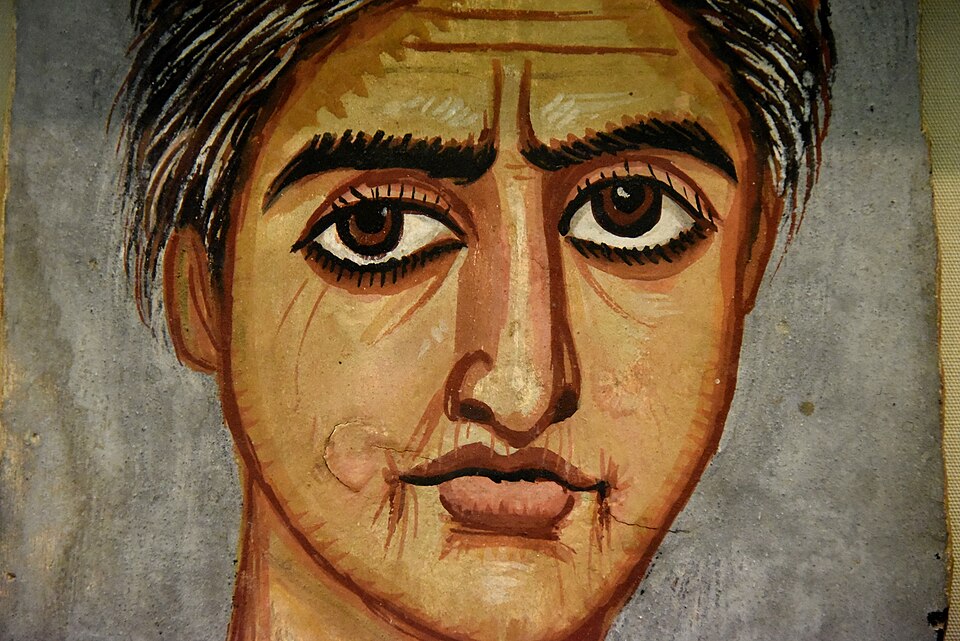
After Octavian (Augustus) defeated Antony and Cleopatra, Egypt became a Roman province with special status — effectively the emperor’s personal domain and a key grain supplier of Rome. Alexandria remained among the empire’s largest cities and an intellectual hub, and its multicultural society produced the Fayum mummy portraits, which blend Roman and Egyptian burial art.
Key developments
Christianity took root early: tradition credits the evangelist Mark with founding the church of Alexandria. Egypt gave Christianity the catechetical school of Alexandria, and, with Anthony the Great and Pachomius, it is regarded as the birthplace of Christian monasticism. Coptic — the last stage of the Egyptian language, written in Greek letters — became the language of Egyptian Christianity, and after the Council of Chalcedon in 451 the Coptic Church split from the imperial church.
End and transition
From 395 Egypt was governed by the Eastern (Byzantine) empire. Sasanian Persia occupied the country from 619 to 629. The era ended with the Arab conquest of 639–642.