Overview
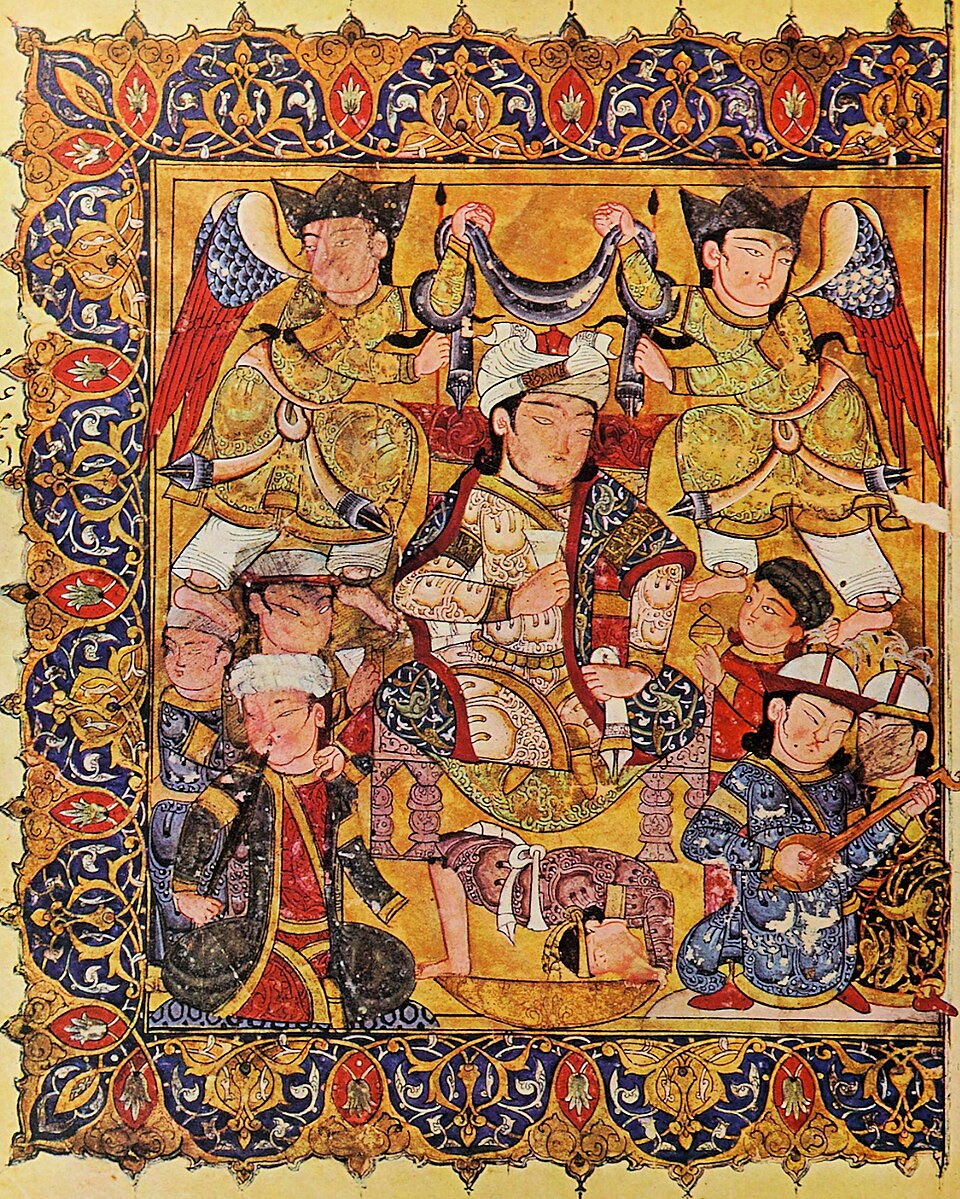
The wardrobe is Turkic in origin and Egyptian in ceremony. Amirs wore the qaba, a long coat closed across the chest, over a shirt and full trousers, with boots for riding; over it went the khil’a, the robe of honour, which was not bought but given. Rank showed in the turban — the enormous takhfifa of the great amirs is the single most recognisable Mamluk object — and in the rank badge, a coloured emblem naming an office such as cup-bearer or polo-master, painted and carved on everything the holder owned as much as worn.
How it is worn
The coat wraps and is belted, and the turban is wound over a cap so that its bulk and its projection are both deliberate; a man’s silhouette from a distance was his position. Non-Mamluk subjects were regulated in the opposite direction: repeated decrees fixed the colours Christians and Jews might wear and forbade them the horse, and the enforcement of these rules varied with each sultan’s need for money or for a show of piety. What a man wore in Cairo was legible to the street as status, faith and office at once.
History
The system decayed with the state. Ottoman conquest in 1517 kept the Mamluk households as a provincial elite, and their dress survived as a local costume rather than a rank system; the blazons stayed on the buildings after they stopped meaning anything on a sleeve. Museum collections of Mamluk metalwork and glass are, in effect, a catalogue of a dress code, since so much of the ornament is the rank badge of the man who commissioned the object.