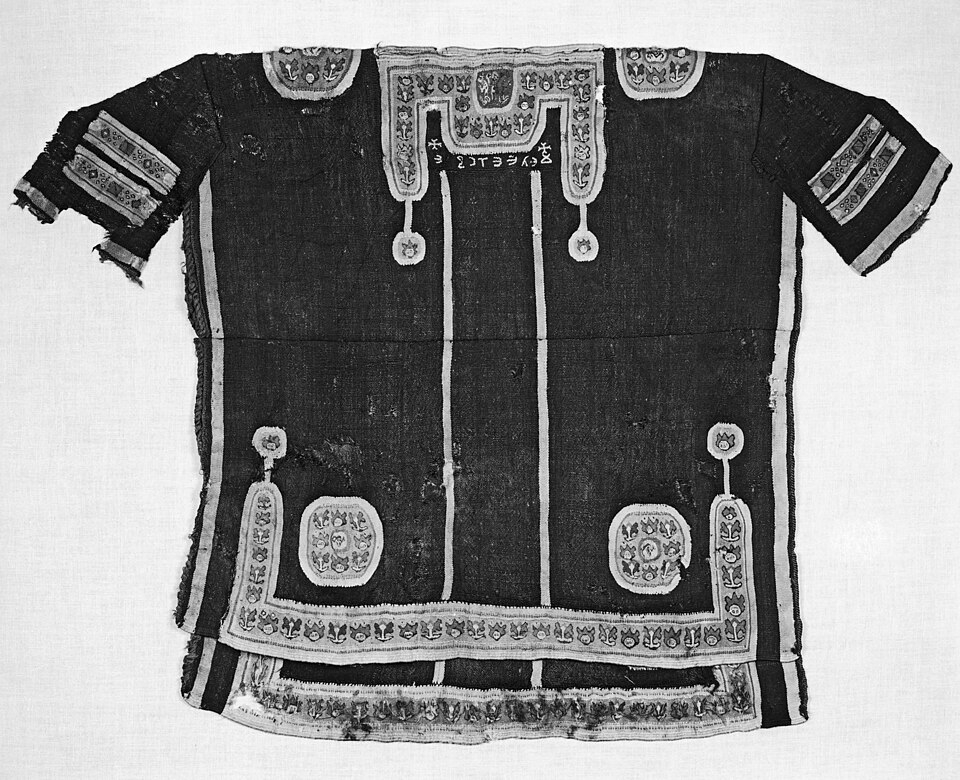
Overview
The tunic is woven to shape on the loom rather than cut from cloth: warp runs sleeve-to-sleeve, the neck opening is left as a slit in the weaving, and the only sewing is the side and underarm seams. The ornament is woven in as the cloth is made — two clavi running down from each shoulder, square or round panels called tabulae and orbiculi at shoulder and knee, and bands at the cuffs and hem, usually in purple wool on undyed linen. Later pieces add polychrome and figures: dancers, hunters, saints, all in the same tapestry technique.
How it is worn
It goes over the head and hangs to the knee or the ankle, belted or loose, with a mantle over it. Because the ornament is positioned on the loom, the wearer cannot move it: the clavi mark the front and back, and a tunic put on sideways would show it at once. Sleeves are wide and short on early examples and narrower and longer later, which is one of the ways surviving pieces are dated when the grave that held them is not recorded.
History
The type spans the third to the tenth century and does not stop at the Arab conquest of 641; the same loom, the same decoration and often the same workshops continue, with inscriptions in Arabic joining those in Greek. Nineteenth-century excavation and a brisk trade in fragments scattered them into museums worldwide, usually cut from the garment as decorative panels — which is why so much of what survives is a roundel with no tunic attached.