Overview
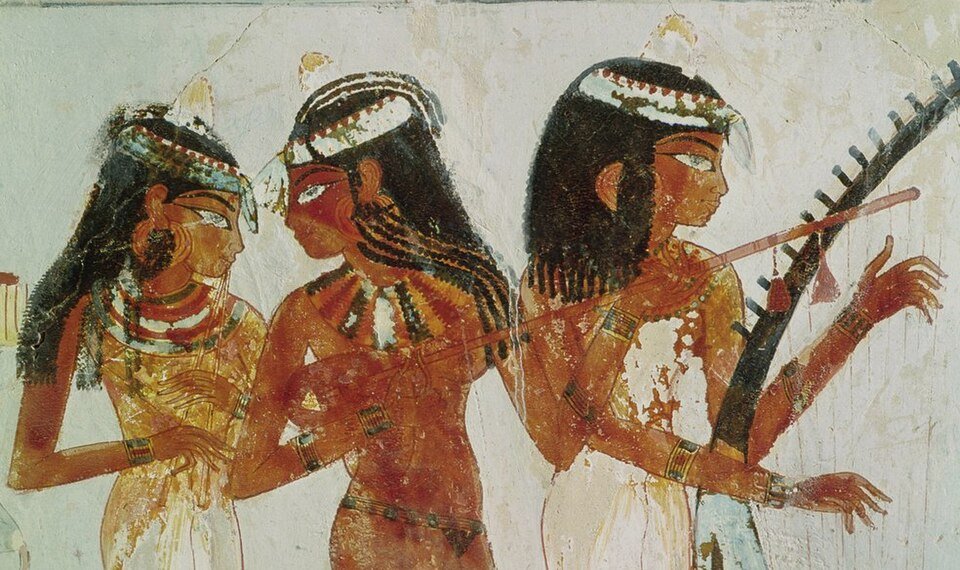
The New Kingdom is where Egyptian dress becomes elaborate. Empire brought wealth, and wealth went into linen so fine it was nearly transparent, pleated in quantities that took real labour, and into wigs, jewellery and cosmetics — a court style recorded in the painted Theban tombs with unusual immediacy.
Key garments and style
Both sexes wore sheer pleated linen: for men a long kilt, often with a triangular projecting front, over an older short one; for women a loose gown of fine cloth, and for both the bag tunic, cut and sewn with a neck opening. The cloth was worn in layers and arranged so the body showed through, which is a deliberate effect rather than an accident of preservation.
The head carried as much as the body. Large plaited wigs, broad bead collars, and heavy earrings and bracelets in gold and faience completed the look. Banquet scenes show cones set on the wigs, long read as perfumed fat that melted through the evening; excavated examples have since been found, though what exactly they were made of is still argued.
The banquet from the tomb of Nebamun is the classic image, and Tutankhamun’s burial preserved actual garments — tunics, sashes and gloves — so for once the paintings can be checked against cloth.
Transition
The Third Intermediate Period kept this wardrobe but treated it conservatively, as inherited form rather than as fashion.