Overview
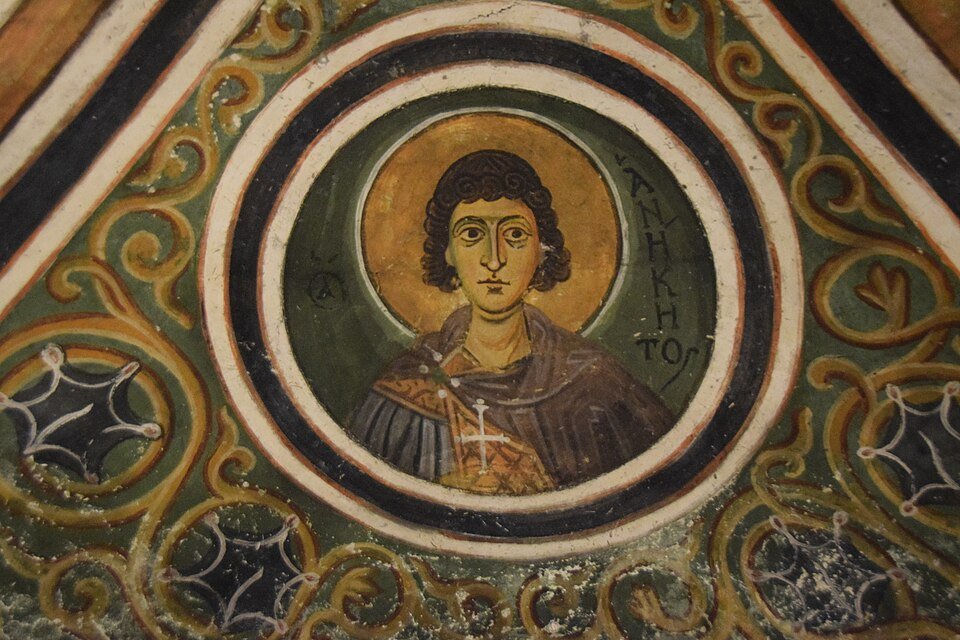
From 330 to 1453 Greece was part of the East Roman, or Byzantine, Empire — an empire Roman in name and law, Greek in language and church. From the reign of Heraclius in the 7th century, Greek was the official language.
Key developments
Christianization transformed the land: the old sanctuaries of Delphi and Olympia closed, the Parthenon became a church, and Justinian closed the Athens philosophy school in 529. Greece became a land of bishoprics and monasteries — Mount Athos’s monastic republic was founded in the 10th century (Great Lavra, 963), Meteora later; both remain living monastic centers and UNESCO sites. Dark centuries followed: Slavic migrations reached the Balkans and Greece in the 6th–8th centuries — their extent is long debated — before Byzantine reconquest and re-Hellenization, while Arab raids cost Crete in the 820s until it was retaken in 961. In 1204 the Fourth Crusade took Constantinople, and Frankish and Venetian lords carved up Greece into the duchies of Athens and Achaea and the Venetian islands. Byzantine successor states — Epirus, later Mistra — recovered parts, and Mistra in the Peloponnese became a late-Byzantine cultural capital, home of the philosopher Plethon.
End and transition
The empire, restored in 1261, steadily dwindled, and Ottoman expansion absorbed Greece piece by piece through the 14th and 15th centuries. On 29 May 1453 Constantinople fell to Mehmed II — the end of the Roman Empire after two millennia and the defining trauma-date of Greek memory. Mistra fell in 1460, marking the end for the Greek mainland. By the standard assessment, scholars emigrating west carried Greek learning into the Renaissance.