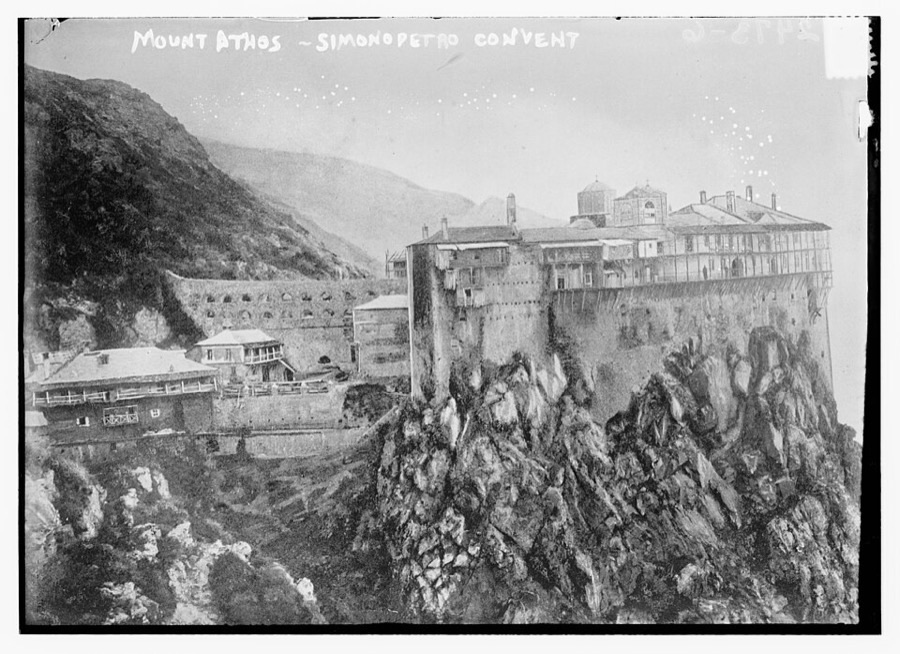
What it was
Mount Athos is the self-governing monastic republic of Orthodox monks on the Athos peninsula of Chalkidiki, northern Greece. Hermits are attested there earlier, but organized monasticism dates from 963, when Athanasius the Athonite founded the Great Lavra with Byzantine imperial patronage. It grew into a federation of monasteries — today twenty ruling monasteries, Greek alongside historic Serbian, Bulgarian, and Russian houses, governed by a council at Karyes.
Role
Athos is a spiritual and cultural treasury of the Orthodox world: the hesychast tradition of the fourteenth century is associated with Gregory Palamas, and its libraries of Byzantine manuscripts, icons, and archives are among the richest anywhere. The avaton rule excludes women from the peninsula and has been in force for roughly a millennium; it periodically draws criticism, including in European bodies.
Fate
Its autonomy has been maintained across regimes: privileged under the Byzantine emperors, preserved under Ottoman rule despite heavy taxation, and today an autonomous monastic state within Greece under the spiritual jurisdiction of the Ecumenical Patriarchate, its status written into the Greek constitution. Roughly 2,000 monks live there today, and in 1988 it was listed as a UNESCO World Heritage site for both culture and nature. It is often described as the longest-lived monastic commonwealth of the Orthodox world — a living Byzantine institution.