Overview
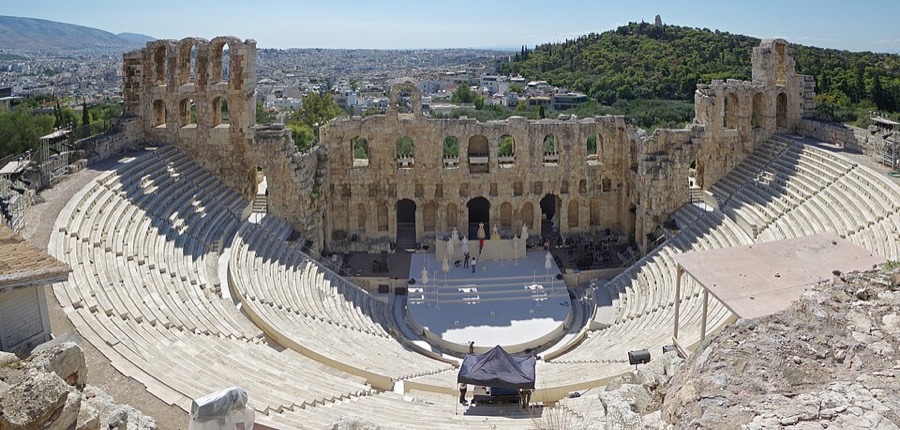
Rome governed the peninsula as the province of Achaea from 27 BC, with a proconsul at Corinth — a city Rome had razed and then refounded as a colony of its own freedmen. Athens went on as a university town to which Roman families sent their sons, and Hadrian rebuilt it: he finished the temple of Olympian Zeus that had stood roofless for six centuries and made the city the seat of a league of all the Greek cities. The line the period is remembered by is Horace’s, that captive Greece took her rough conqueror captive, and educated Romans stayed bilingual for as long as the empire lasted in the west.
Key developments
The first century was hard: Sulla sacked Athens in 86 BC after it sided with Mithridates, and Rome’s civil wars were fought on Greek soil — Pharsalus in 48, Philippi in 42, Actium in 31 BC. Under the empire Greece became the province of Achaea and enjoyed the imperial peace, courted by philhellene emperors: Nero made a theatrical tour, and Hadrian showered Athens with benefactions, completing the temple of Olympian Zeus and founding the Panhellenion league. This 2nd-century revival, the Second Sophistic, was also the era of Plutarch and Pausanias. Christianity arrived early: according to Acts, Paul preached at Athens and Corinth in the 50s AD, and Greek was the language of the New Testament and the early church.
End and transition
The Herulian raid sacked Athens in 267, though recovery followed. The era ends in 330, when Constantine founded Constantinople as the new capital — the center of gravity of the Greek East for the next millennium.