What happened
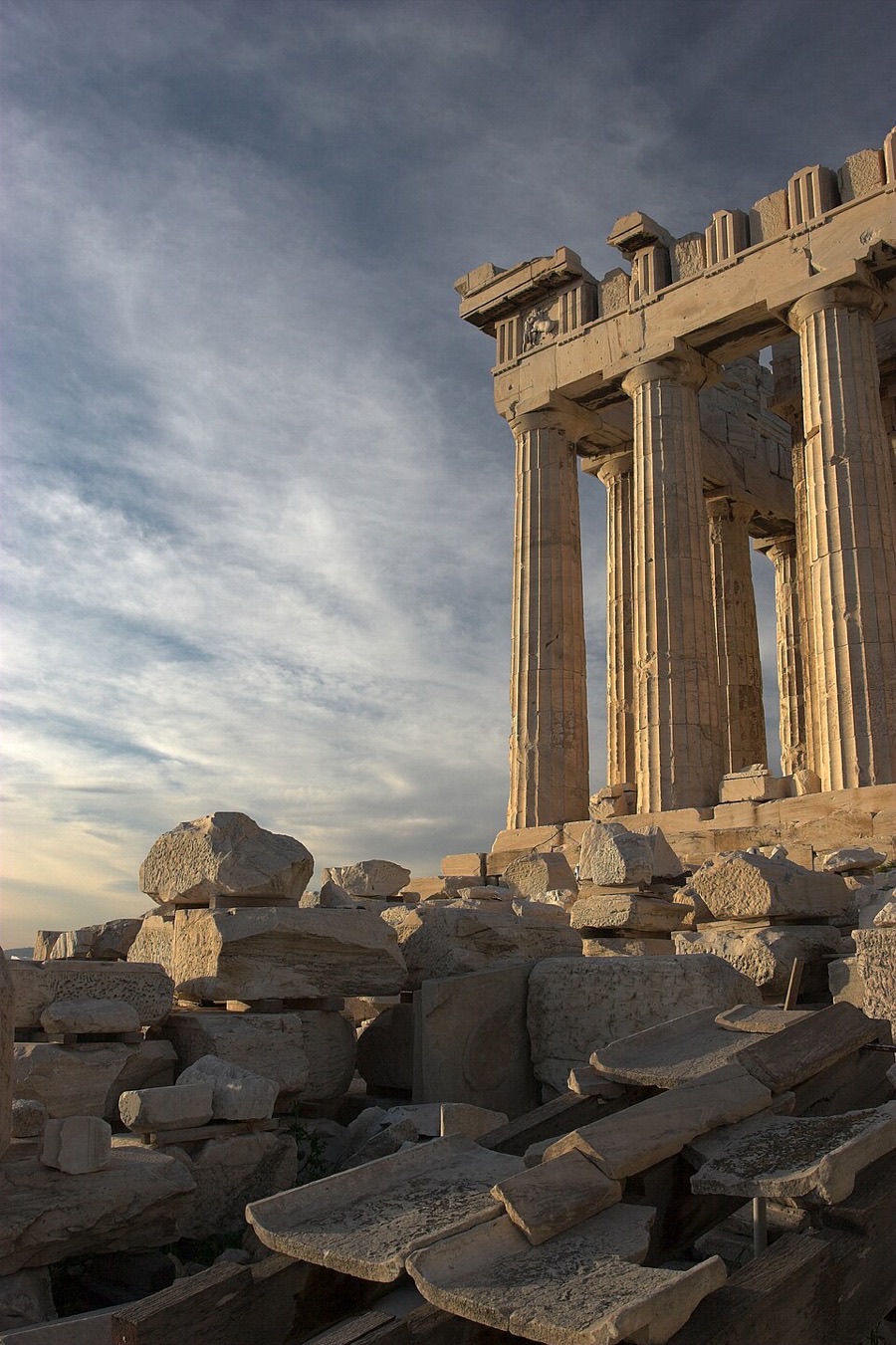
Between 447 and 432 BC, Athens raised the temple of Athena Parthenos on the Acropolis as the centerpiece of Pericles’ building program. Ictinus and Callicrates were the architects, and the sculptural program was directed by Phidias, whose colossal gold-and-ivory statue of Athena stood inside (the statue is long lost). Built of Pentelic marble in the Doric order with Ionic elements, the temple is celebrated for its optical refinements: the columns lean slightly inward and the platform curves, so that the whole looks perfectly straight. Its frieze, metopes, and pediments are among the summits of Greek sculpture.
Background
The project was funded partly from the treasury of the Delian League, which had been moved to Athens in 454 BC. That was controversial in antiquity and remains a standing point in modern discussions of the Athenian empire.
Consequences
The building later served as a church of the Virgin under Byzantium and as a mosque under the Ottomans. In 1687 a Venetian shell hit the Ottoman powder magazine stored inside, and the catastrophic explosion produced the ruin seen today. About half the surviving sculptures were removed by Lord Elgin between 1801 and 1812 and are in the British Museum; Greece has demanded their return for decades, making this one of the most prominent repatriation disputes in the world, while the Acropolis Museum in Athens displays the rest. A UNESCO World Heritage site under long-running restoration, the Parthenon endures as among the most recognizable symbols of classical Greece.