Overview
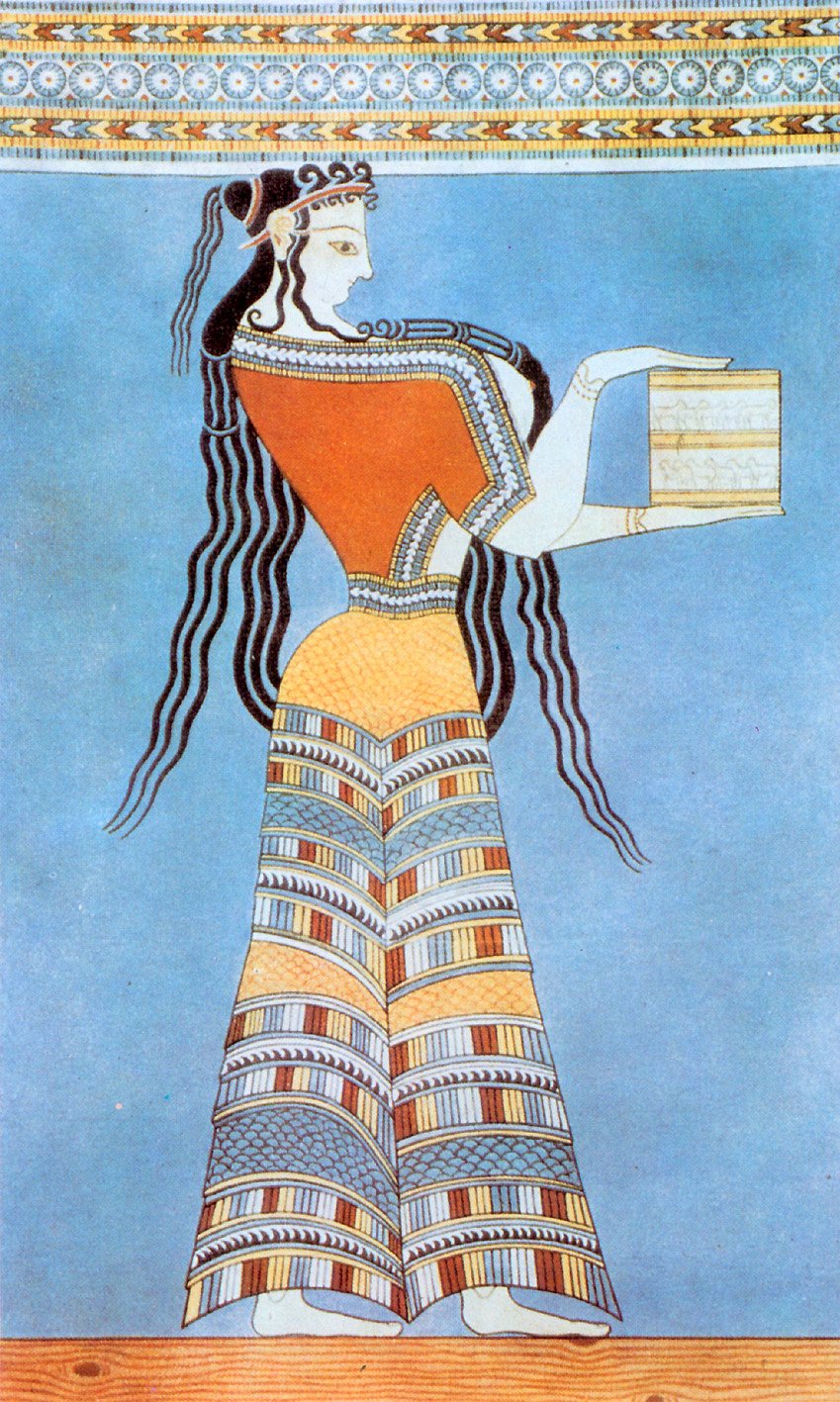
The mainland palaces inherited a silhouette rather than invented one. The bodice is close-fitting with set-in sleeves, the skirt falls to the ankle in tiers of woven pattern, and the whole is constructed and sewn rather than draped. What changes from Crete is the register: the flounces flatten into bands, the patterns become geometric and repetitive, and the open-fronted bodice of the Minoan figurines is generally closed. Where Minoan dress reads as fluid, Mycenaean dress reads as ceremonial.
How it is worn
The skirt is stepped into and fastened at the waist, and the bands are separate widths of patterned cloth joined horizontally, so the pattern changes down the length. Over the bodice a woman wore heavy jewellery — the shaft graves gave up gold rosettes sewn onto cloth, and gold and glass beads by the hundred. The hair is long, worked into locks that fall in front of and behind the shoulder, and bound with a fillet. Men in the frescoes and on the inlaid daggers wear a short belted kilt, bare above the waist, with the same taste for banded pattern.
History
This is the one prehistoric Aegean dress with a written record behind it. The Linear B tablets from Pylos and Knossos are palace accounts, and a large part of them is textiles: named categories of cloth, allotments of wool by the flock, and groups of women workers listed by task — spinners, weavers, finishers — in the hundreds. Dress at this scale was an industry the palace ran. When the palaces burned around 1200 BC the industry went with them, and the Greek dress that emerges afterwards is the pinned and draped peplos, which requires no cutting, no sewing and no accounts.