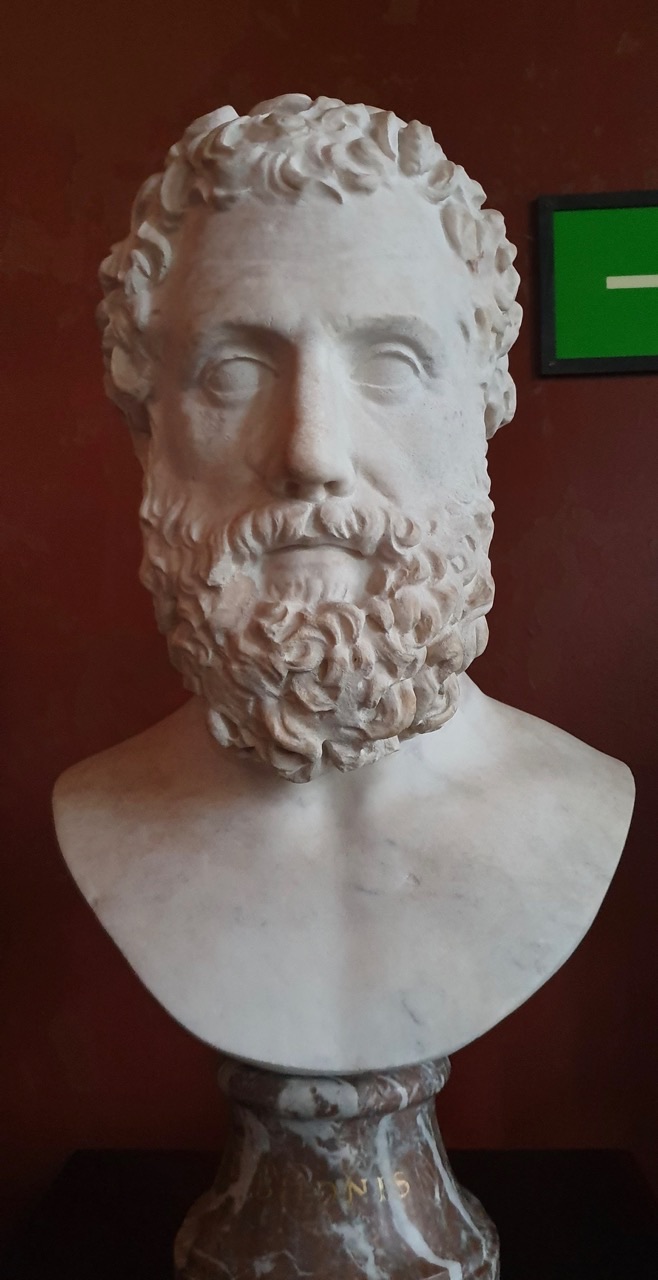
Who they were
Aeschylus (c. 525–456 BC) was an Athenian tragedian, the earliest of the city’s three great tragic poets. He was a veteran of Marathon, where he fought the Persians in 490 BC, and according to tradition his epitaph recorded only that service, not his poetry. He died at Gela in Sicily in 456 BC; the tale that an eagle killed him by dropping a tortoise on his head is legend.
What they did
Aristotle credits him with adding the second actor, turning choral performance into drama. His hallmarks were grand language, spectacle, and connected trilogies. Of some 70–90 plays, seven survive. The Persians (472 BC) is the only surviving Greek tragedy on a historical event, staging the defeat at Salamis from the Persian court’s side with striking sympathy for the defeated. The Oresteia trilogy (458 BC) takes as its theme vengeance transformed into court justice on the Areopagus — the founding myth of law. The story that he was accused of revealing the Eleusinian Mysteries is ancient but uncertain.
Legacy
He is regarded as the founder-figure of Western drama. According to tradition, his plays were granted the unique honor of state-funded revivals after his death.