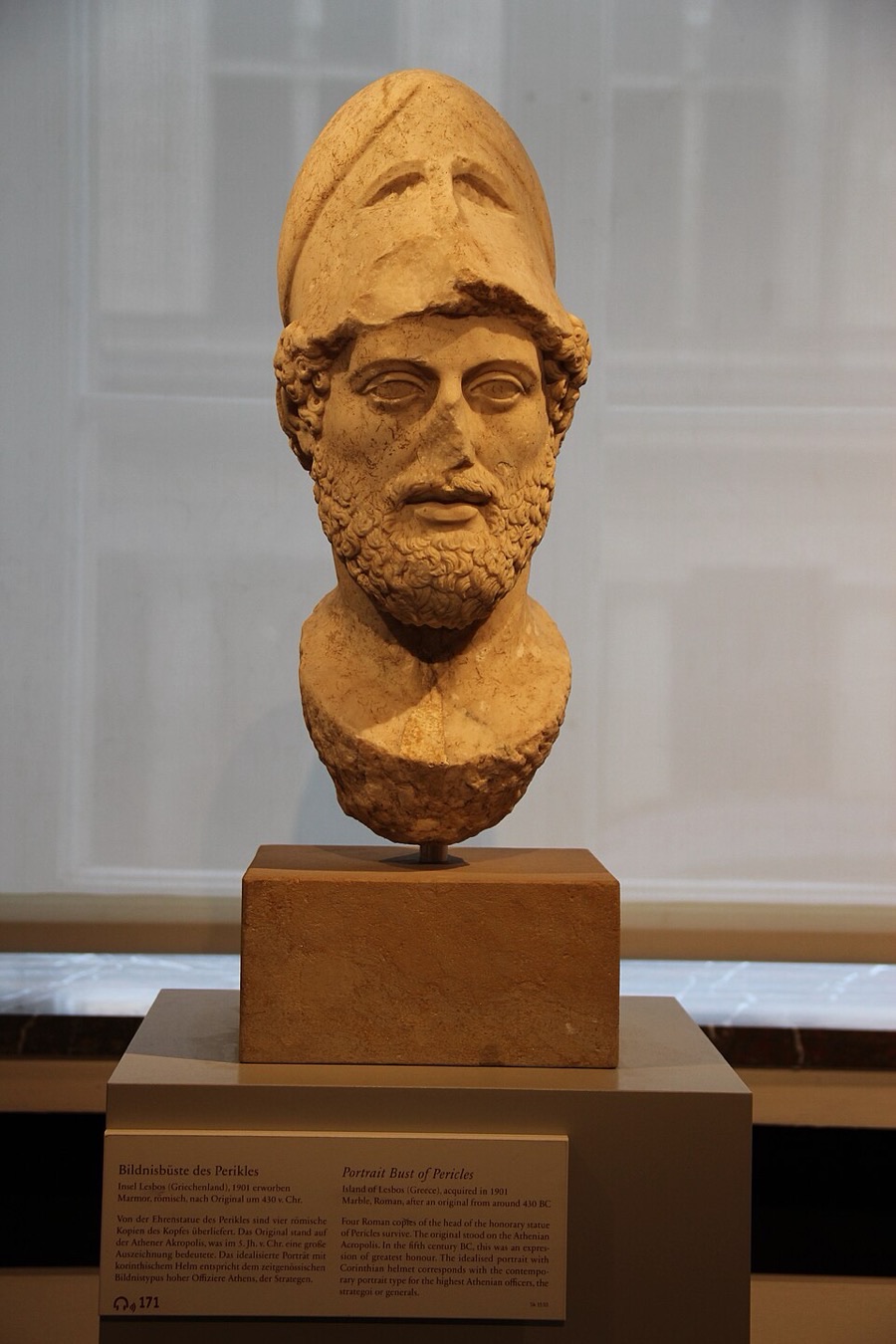
Who they were
Pericles (c. 495–429 BC) was Athens’ leading statesman for roughly three decades from the 450s, elected general (strategos) year after year. Thucydides famously called Athens under him a democracy in name but in fact the rule of its first citizen.
What they did
He deepened democracy: pay for jurors and officeholders opened participation to the poor, though his citizenship law of 451 BC restricted citizenship to those with two Athenian parents. He rebuilt the Acropolis burned by the Persians — the Parthenon and the Propylaea — employing thousands, funded in part from Delian League tribute, a point critics attacked then and since. He consolidated the league into an Athenian empire and suppressed revolts such as that of Samos. At the outbreak of the Peloponnesian War his strategy — withdraw behind the walls and rely on the fleet — was prudent, but it left the crowded city vulnerable to the plague.
Legacy
The Funeral Oration, as rendered by Thucydides, stands as the classic statement of democratic ideals. Pericles himself died of the plague in 429 BC, two years into the war. His partnership with Aspasia of Miletus drew mockery from contemporaries and fascination from posterity. His name marks the era itself: the Periclean age.