Overview
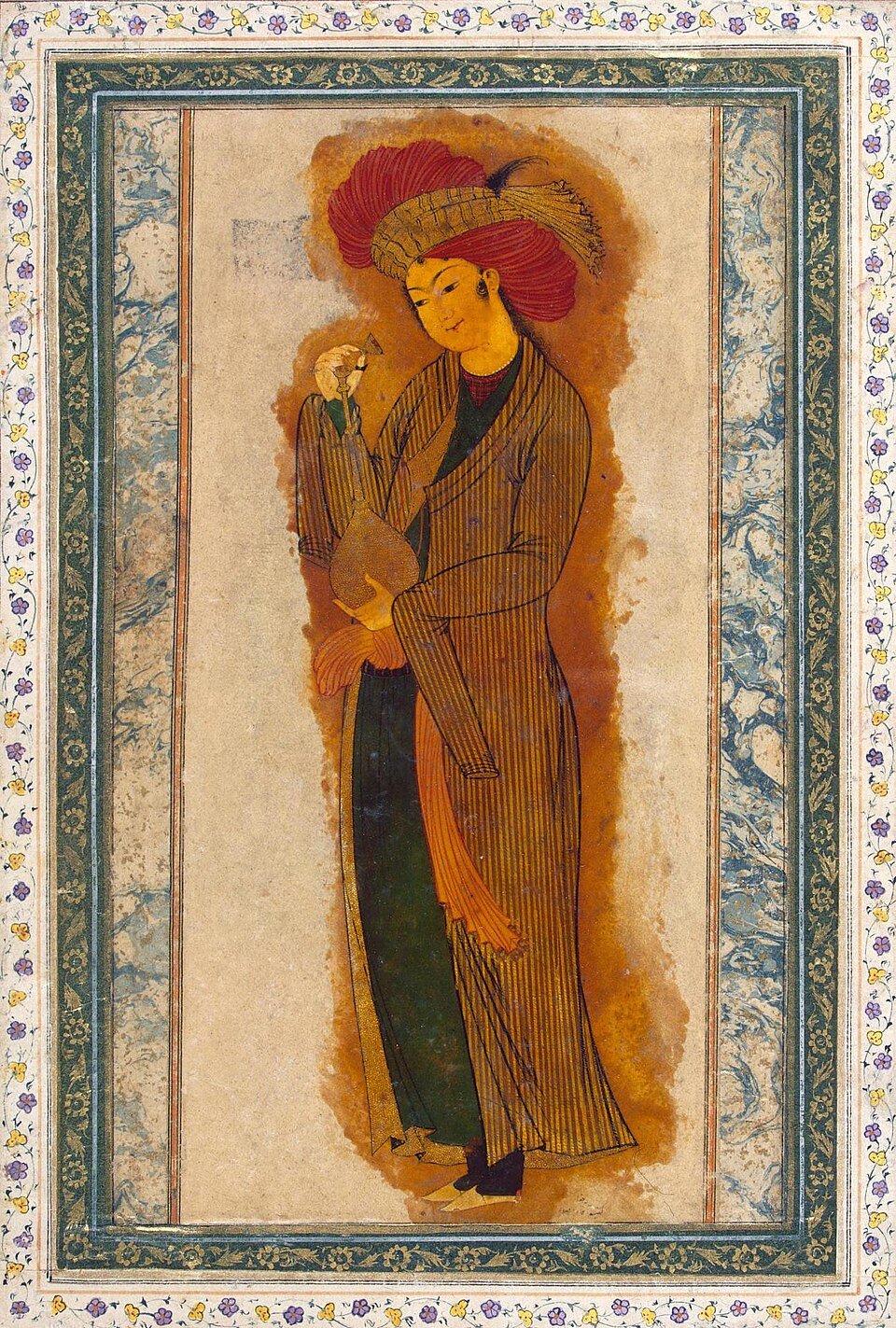
The Safavids made Iran a Shia state and dressed the claim on their followers’ heads. The dynasty’s military backing came from Turkmen tribes who wore a tall red cap, and the empire’s court style was built outward from that — alongside a silk industry that became one of the state’s principal assets.
Key garments and style
The taj-i haydari is the emblem: a tall red baton of twelve gores, one for each Shia imam, with a turban wound about it. The tribesmen who wore it were called Qizilbash, the red-heads, and the name attached to the whole military class. Over time the court turban grew rounder and larger and the red baton receded, so Safavid painting can be dated by headgear alone.
The body was dressed in a long robe cut close through the chest and flaring below, crossed at the front and held by a patterned sash, over trousers and soft boots.
Silk was a royal monopoly under Shah Abbas, exported through Isfahan and the Gulf and used as diplomatic currency; Safavid figured silks and velvets, some woven with figures from Persian poetry, are among the finest textiles ever made. Reza Abbasi and the Isfahan painters recorded the way it was worn — languid youths in sashed robes and small turbans — in drawings made as works in themselves.
Transition
After the Afghan sack of Isfahan in 1722 the workshops never recovered, and the Afsharid and Zand courts carried the style on with reduced means.