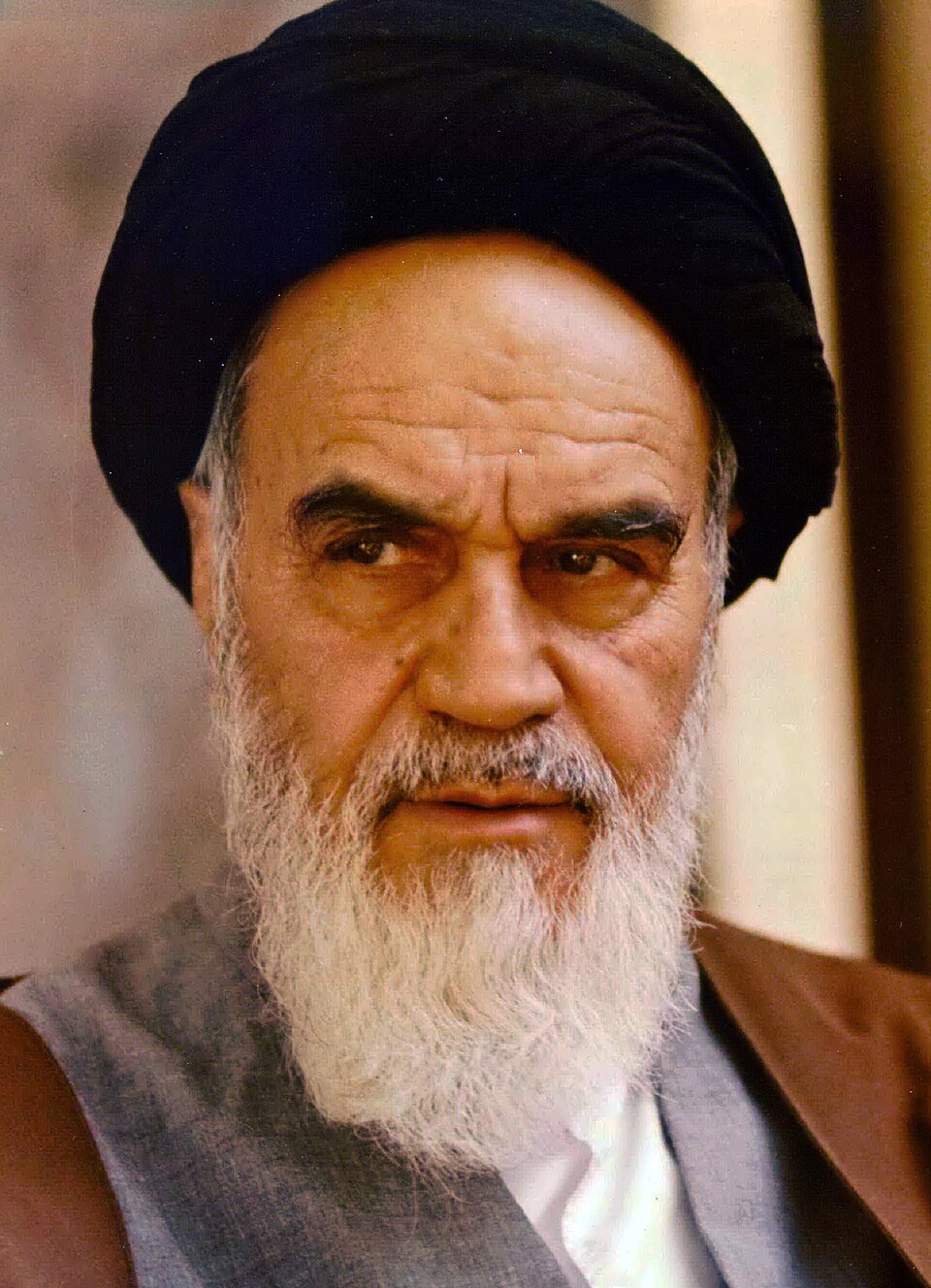
Who they were
Ruhollah Khomeini (1902–1989) was a Shia cleric of the highest rank, a marja, from the town of Khomein, and taught in Qom. He rose to national prominence in 1963–64 by denouncing the White Revolution and the status-of-forces privileges granted to US personnel; he was arrested, the 1963 protests were suppressed with deaths whose figures vary, and in 1964 he was exiled — to Turkey, then Najaf, and finally Paris in 1978. In Najaf he developed the doctrine of velayat-e faqih, guardianship of the Islamic jurist, arguing for clerical rule — at the time a minority position among senior clergy.
What they did
From exile, his sermons circulated on smuggled cassettes and made him the revolution’s voice and symbol. He returned on 1 February 1979 to a mass welcome, refused any compromise with the interim monarchy government, appointed his own, and oversaw the referendum creating the Islamic Republic. As Supreme Leader (1979–89) he presided over a constitution built around his doctrine, backed the seizure of the US embassy after the fact, and prosecuted the Iran–Iraq War, accepting the 1988 ceasefire with a famous remark likening the decision to drinking poison. Under his rule rival factions were suppressed and political prisoners executed en masse — notably the 1988 executions, which rights organizations have documented with estimates in the thousands — while law and society were strictly Islamized. His 1989 fatwa against the author Salman Rushdie drew worldwide condemnation.
Legacy
He died in June 1989; his funeral drew crowds estimated in the millions, among the largest in history. He was succeeded as Supreme Leader by Ali Khamenei. As founder of the Islamic Republic he is widely counted among the 20th century’s most consequential figures — revered by supporters as a spiritual and anti-imperialist leader, condemned by opponents for repression.