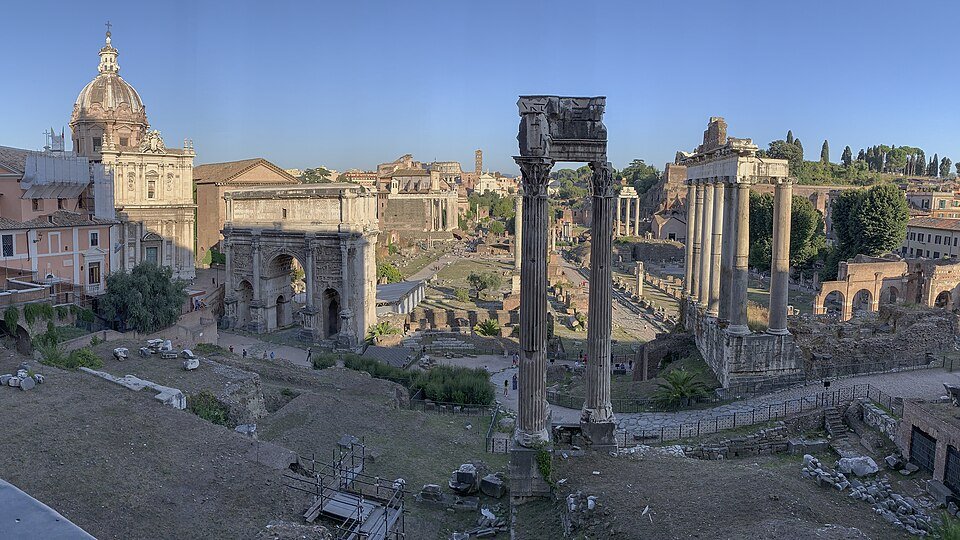
Overview
The Roman Republic (509–27 BC) governed through elected magistrates — two annually elected consuls at the top — a powerful Senate, and popular assemblies.
Over these centuries Rome grew from a city-state into the master of the Mediterranean.
Key developments
The early Republic saw the “struggle of the orders,” in which plebeians won rights: tribunes of the plebs, the Twelve Tables codified about 450 BC, and eventually legal equality.
Rome conquered the Italian peninsula, then fought Carthage in the three Punic Wars (264–146 BC). Hannibal invaded Italy and crushed a Roman army at Cannae in 216 BC, but Rome prevailed and destroyed Carthage in 146 BC, the same year it subdued Greece.
Expansion brought wealth and slaves and strained society, producing the reform crisis of the Gracchi, the rivalry of Marius and Sulla, and the slave revolt led by Spartacus (73–71 BC).
End and transition
In the late Republic strongmen dominated: the First Triumvirate, Julius Caesar’s conquest of Gaul and crossing of the Rubicon (49 BC), civil war, and Caesar’s dictatorship and assassination in 44 BC.
His heir Octavian defeated Mark Antony and Cleopatra at Actium (31 BC) and in 27 BC became Augustus, turning the Republic into the Empire.