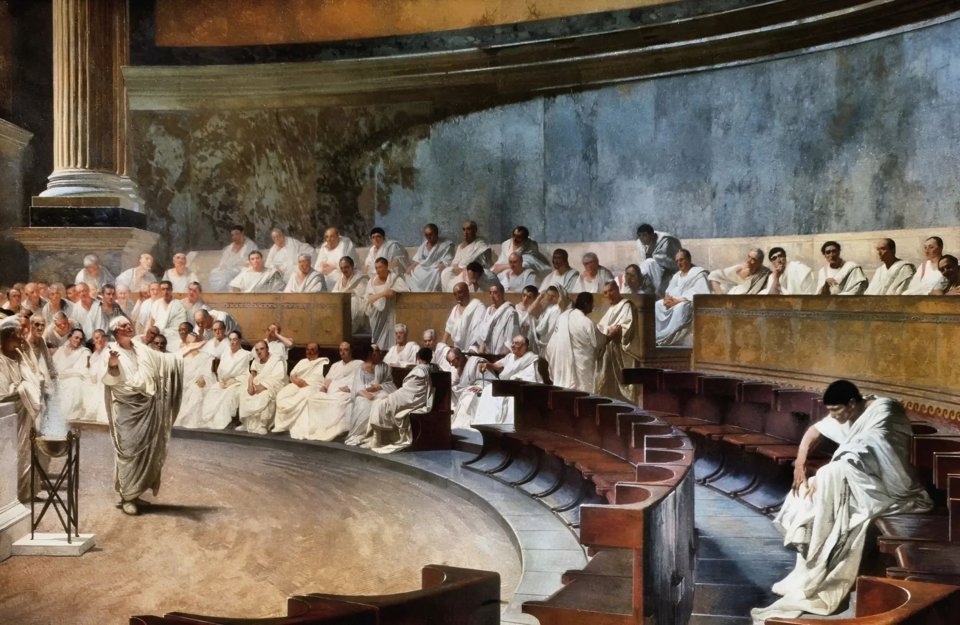
What it was
It numbered about three hundred members through most of the Republic — Sulla raised it to six hundred and Caesar to some nine hundred — and a man sat for life once the censors had entered his name on the roll, which in practice meant once he had held a magistracy. It met in the Curia, or in any temple a magistrate consecrated for the purpose, and its decisions were formally advice and nothing more: a senatus consultum advised the magistrates rather than binding them. What made the advice hard to refuse was that the Senate controlled the treasury, received foreign embassies, and decided which commander was sent to which province.
Role
Under the Republic it was the dominant organ of government, guiding finance, foreign policy, and administration through its prestige and the magistrates drawn from its ranks, though formal power lay with the assemblies and elected officials. Under the emperors it lost real power, largely ratifying the emperor’s will while keeping honor and administrative duties.
Fate
It continued in reduced form to the end of the Western Empire. Its emblem SPQR (the Senate and People of Rome) remained the symbol of the Roman state, and the word senate endures for legislative bodies worldwide.