What happened
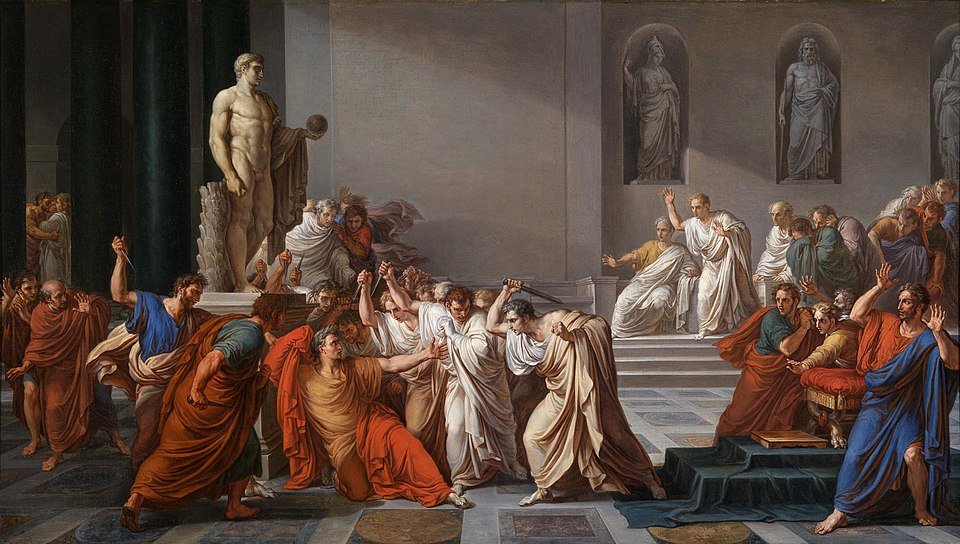
It happened not in the Senate House but in a hall attached to Pompey’s theatre, where the Senate was meeting while the Curia was being rebuilt — so Caesar fell at the foot of a statue of the rival he had beaten in the civil war. Tillius Cimber opened the attack by seizing his toga over a petition, and Casca struck first. Of twenty-three wounds, the physician who examined the body afterwards judged only one to have been fatal. The body lay in the hall for hours before three slaves carried it home.
Background
Caesar had won the civil war against Pompey and been made dictator, latterly dictator in perpetuity. Senators fearing the end of the Republic, led by Marcus Junius Brutus and Gaius Cassius Longinus, who called themselves the Liberators, conspired against him.
Consequences
Instead of restoring the Republic, the killing brought renewed civil war. Caesar’s heir Octavian and Mark Antony defeated the assassins at Philippi (42 BC), then fell out, and Octavian’s victory at Actium (31 BC) made him Augustus, the first emperor.