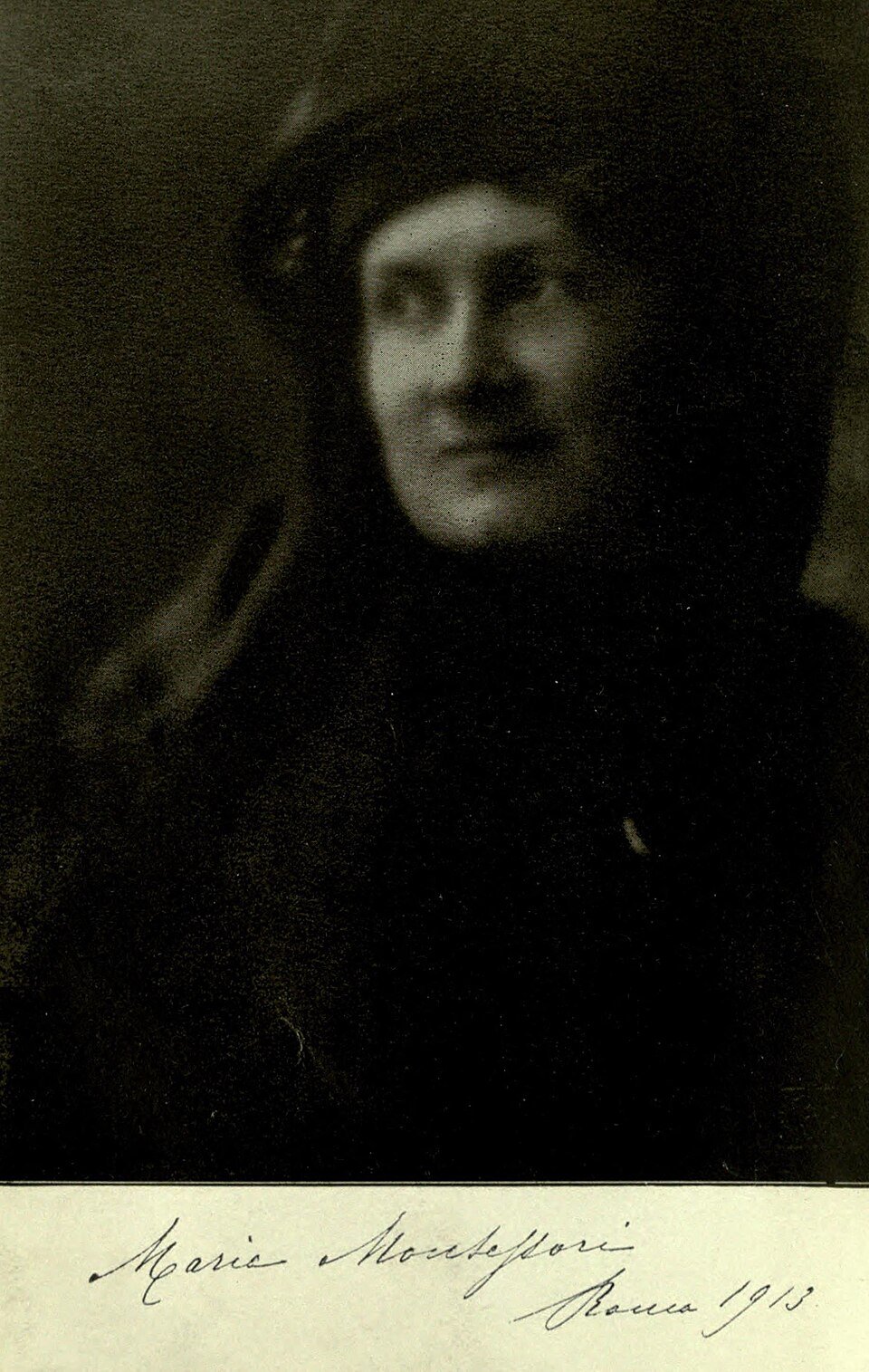
Who they were
Maria Montessori was born in Chiaravalle in the Marche. Against the conventions of her time she studied medicine at the University of Rome, graduating in 1896 as one of Italy’s first women doctors, and her early work with children with disabilities convinced her that education, more than medicine, was the lever for changing children’s lives.
What they did
In 1907 she opened the first Casa dei Bambini, or Children’s House, in the poor San Lorenzo district of Rome. There she developed her method: children choose their own work within a prepared environment, learn with hands-on materials at their own pace, and mix across ages, with the teacher as observer and guide. Her 1909 book carried the method around the world, and she spent the rest of her life training teachers across Europe, the Americas, and India. Mussolini’s regime first embraced and then closed Montessori schools in the mid-1930s when she refused to bend education to fascist ends; she left Italy and continued her work abroad, spending the war years in India.
Legacy
She was nominated three times for the Nobel Peace Prize and died in the Netherlands in 1952. Thousands of Montessori schools operate around the world, and mainstream early education has absorbed many of her ideas — child-sized furniture, hands-on materials, and respect for the child’s independent activity.