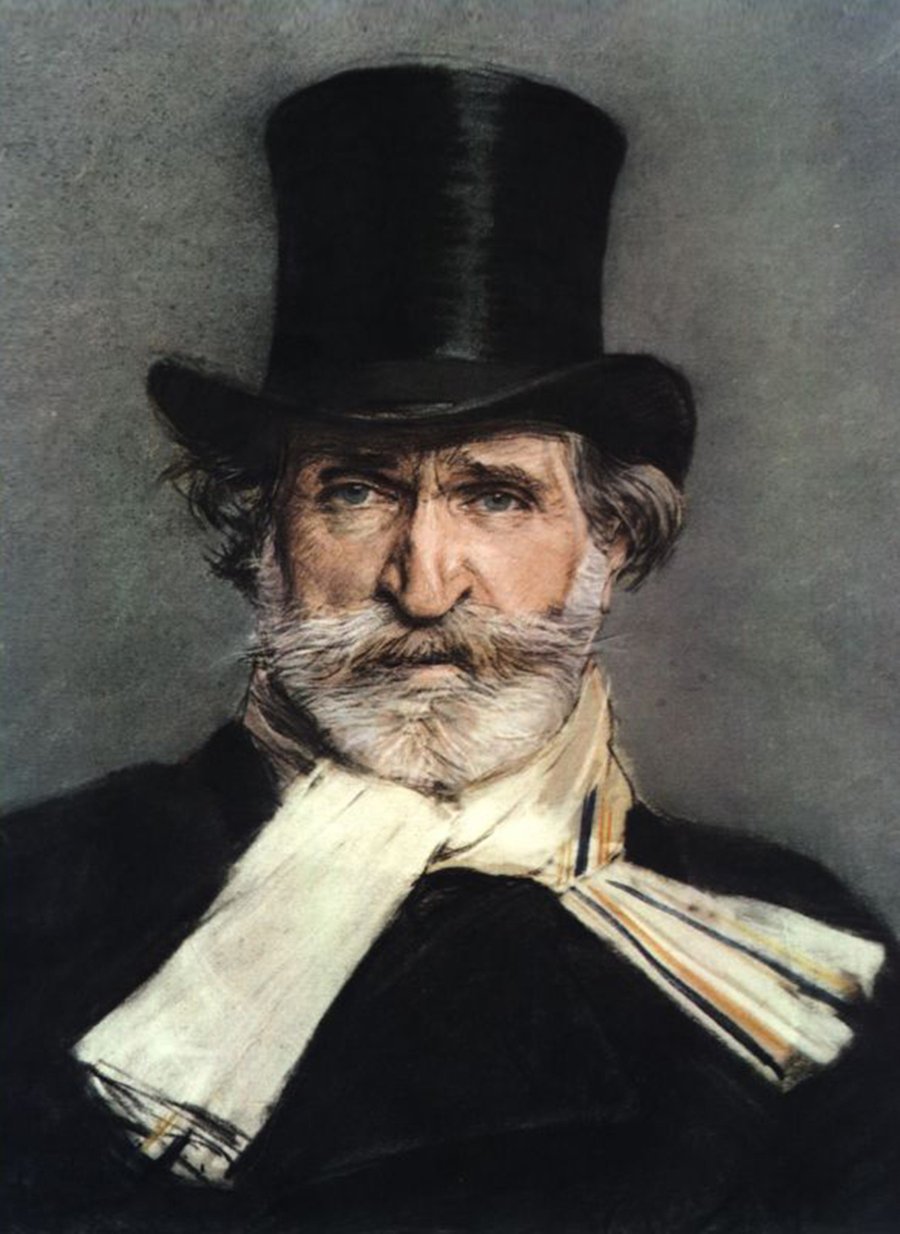
Who they were
Giuseppe Verdi was born to an innkeeper’s family in Le Roncole, near Busseto in the Parma region. After early struggles and the deaths of his first wife and their two children, the triumph of Nabucco at La Scala in 1842 launched the most successful opera career of the century.
What they did
In the early 1850s he produced in quick succession Rigoletto, Il trovatore, and La traviata, still among the most performed operas in the world; Aida followed in 1871, and in old age the Shakespearean Otello (1887) and Falstaff (1893). The chorus of the Hebrew slaves from Nabucco, Va, pensiero, was embraced as an anthem of Italian national feeling, and during unification the cheer Viva VERDI doubled as an acronym for Vittorio Emanuele, King of Italy. At Cavour’s urging he sat in the first Italian parliament, and his Requiem (1874) honored the writer Alessandro Manzoni.
Legacy
He died in Milan in 1901, mourned by crowds in the hundreds of thousands. He endowed Casa Verdi, a rest home for musicians in Milan where he is buried, and his operas remain the core of the repertory in opera houses worldwide.