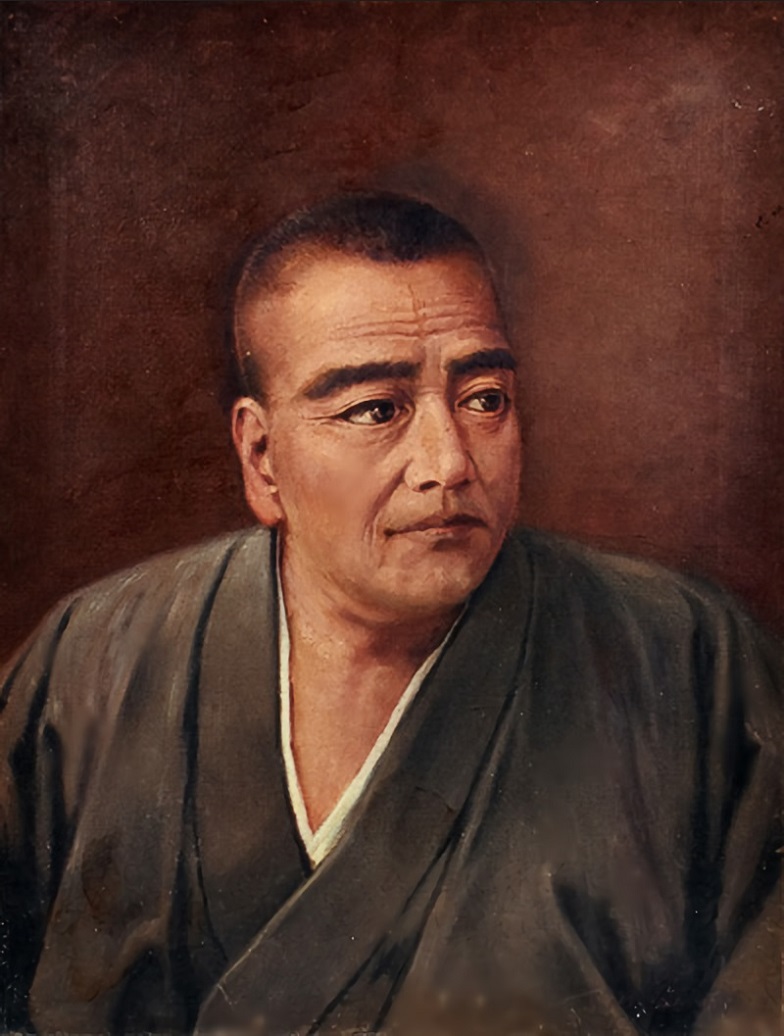
Who they were
A samurai leader of Satsuma, he was twice exiled by his own domain. He returned to lead Satsuma’s forces into the Satsuma–Choshu alliance and the Boshin War, where he negotiated the bloodless surrender of Edo Castle with Katsu Kaishu in 1868.
What they did
A pillar of the early Meiji government, he resigned in 1873 when his push for a hard line on Korea (seikanron) was rejected, returning to Kagoshima to run private academies.
In 1877 he led disaffected samurai in the Satsuma Rebellion — besieging Kumamoto Castle, then falling back — and died in the final battle at Shiroyama on September 24, 1877.
Legacy
Pardoned posthumously in 1889, he has stood in bronze with his dog in Ueno Park since 1898. He remains the beloved, contradictory embodiment of samurai virtue — serving the new Japan, and resisting it.