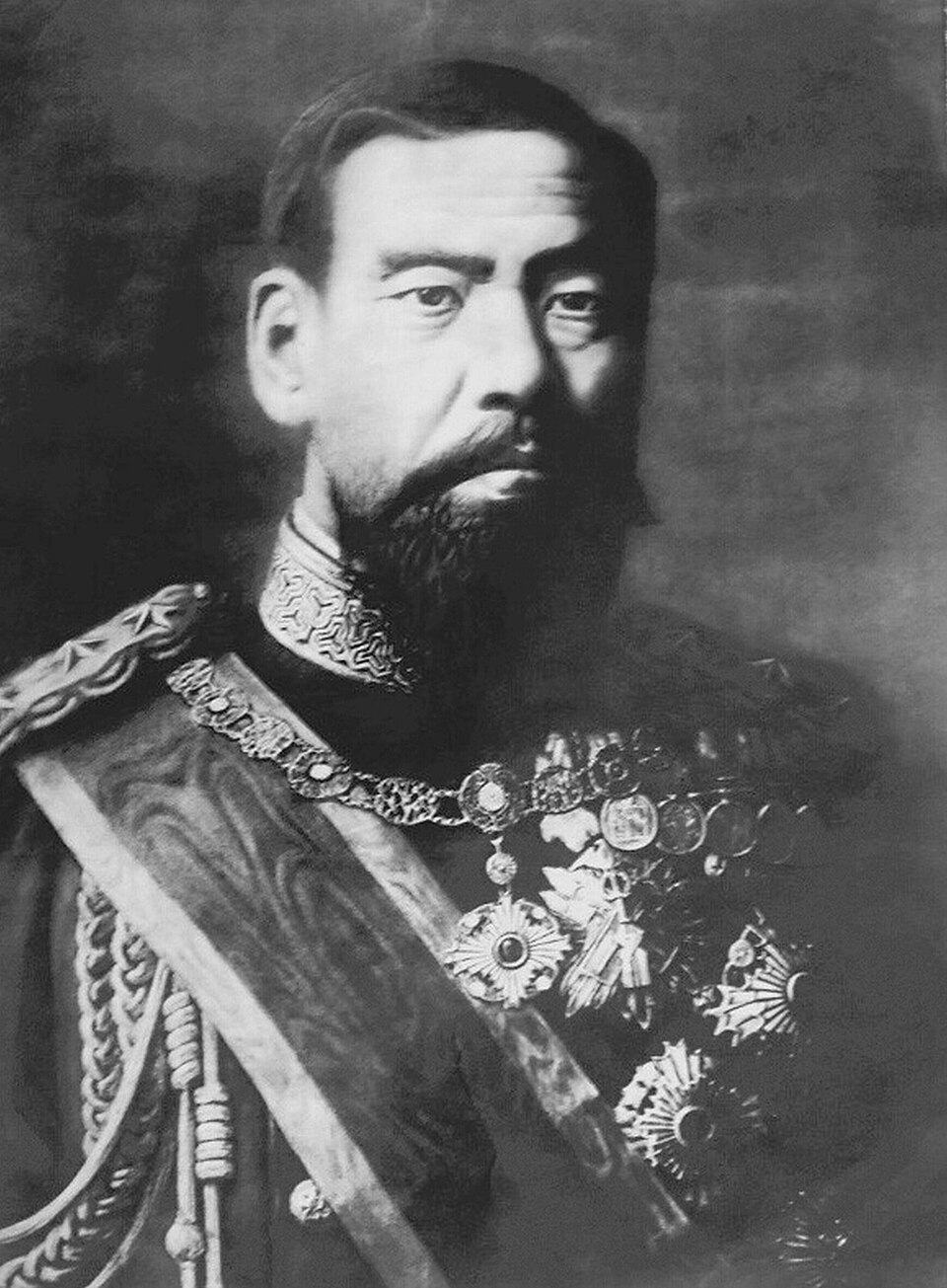
Overview
The Meiji Restoration of 1868 placed the young Emperor Meiji at the head of a modernizing state, and the court moved to Tokyo. Sweeping reforms followed: the domains were abolished in favor of prefectures (1871), conscription was introduced (1873), and land-tax reform and compulsory education were carried out. The first railway line opened between Shinbashi and Yokohama (1872), the Iwakura Mission studied the West (1871–73), and the Satsuma Rebellion (1877) was the last samurai revolt.
Key developments
The Meiji Constitution (1889) and the Imperial Diet (1890) made Japan Asia’s first constitutional state, while zaibatsu-led industry grew rapidly. Victories over Qing China (1894–95) and Russia (1904–05) and the annexation of Korea (1910) made Japan an imperial power.
End and transition
Emperor Meiji died in 1912, and the era gave way to Taisho.