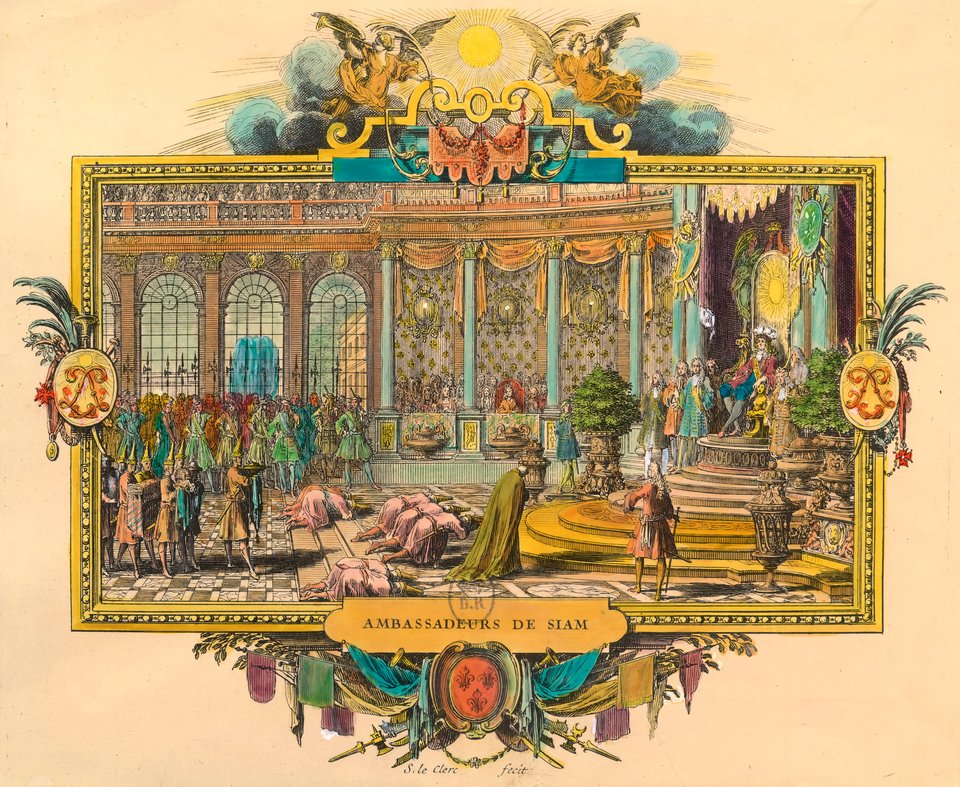
Overview
Ayutthaya was one of the great trading cities of Asia, with Persian, Chinese, Japanese, Dutch and Portuguese quarters, and its dress shows it. The garments stayed Siamese and unstitched; the cloth came from half the world, and who could wear which cloth was fixed by law.
Key garments and style
Both men and women wore the chong kraben, a long cloth wrapped about the hips, passed between the legs and tucked at the back, leaving the legs free — practical in heat and unchanged by any amount of foreign trade. Women added the sabai, a length of cloth wound across the chest and over one shoulder. The upper body was otherwise commonly bare, which European visitors remarked on at length.
Rank was expressed through textile. Pha yok, silk brocaded with gold or silver thread, was court cloth, and the sakdina system that graded every subject by rank governed which patterns and colours a person might wear.
The most distinctive cloth was made abroad to Siamese order: painted and printed cottons commissioned from the Coromandel coast of India in designs supplied from Ayutthaya, so the pattern is Thai and the manufacture Indian.
Transition
The Burmese sack of 1767 destroyed the city, its workshops and its records, and Thonburi and then Bangkok rebuilt the tradition from what survived.