Overview
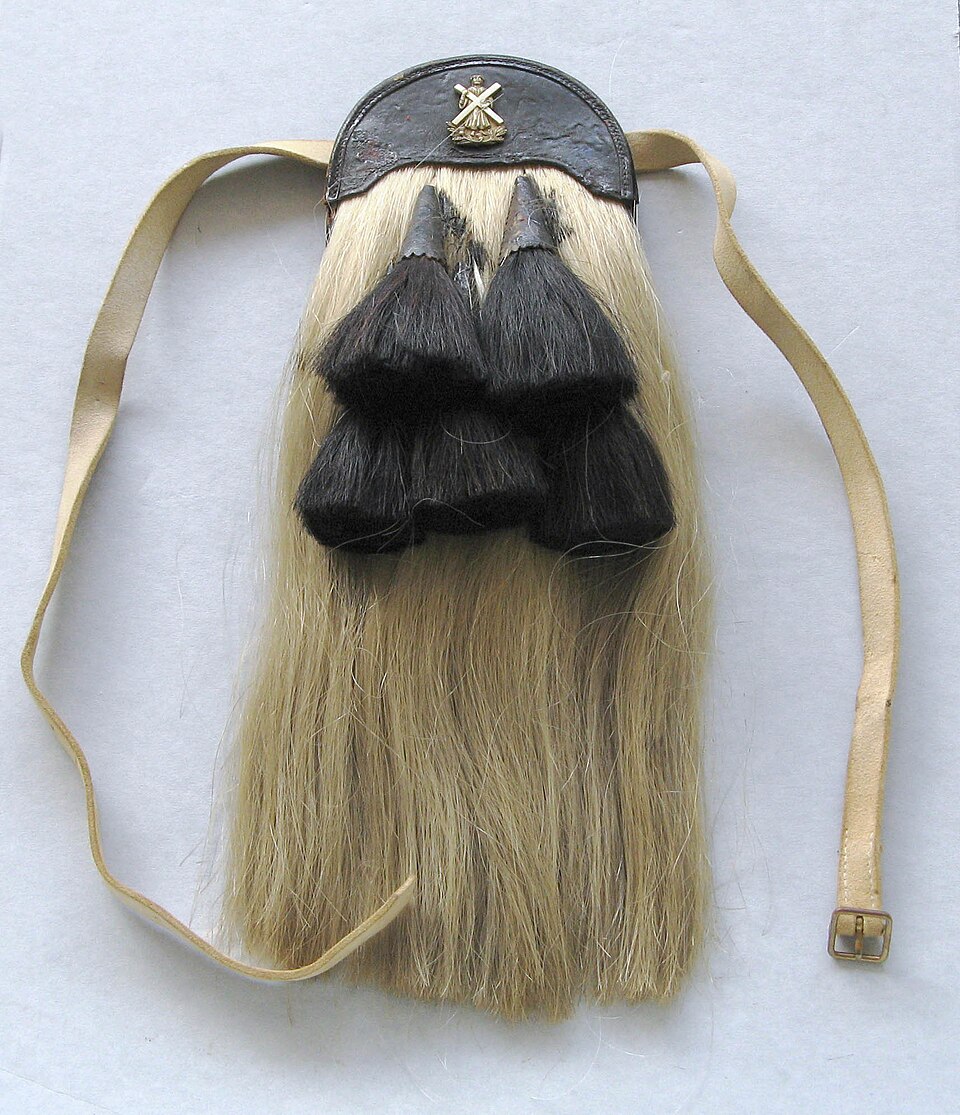
It is a leather or fur pouch with a flap, hung from a chain belt that sits on the hips rather than the waist, so the pouch falls a hand’s width below the belt buckle. Three grades are recognised: a plain leather day sporran, a semi-dress with a fur front and leather back, and a full-dress sporran of long horsehair or seal-substitute fur with a decorated silver cantle. Clan crests and thistles are the usual metalwork.
How it is worn
It hangs centred at the front and is pushed to the side when sitting down, which is the one piece of practical etiquette everyone learns late. It is worn with the day version by daylight and the hair sporran in the evening, matched to the rest of the outfit rather than to the tartan. Contrary to the joke, it does not swing when walking if the chain is the right length — a swinging sporran is a badly fitted one.
History
Highland men carried a purse at the belt long before the kilt was regulated, and the sporran becomes a fixed part of Highland dress in the eighteenth century, when the belted plaid gave way to the small kilt. The 1746 Dress Act banned Highland dress and the 1782 repeal brought it back as ceremonial rather than daily clothing, which is when the ornamented full-dress sporran appears. Every part of the modern outfit dates from that revival.