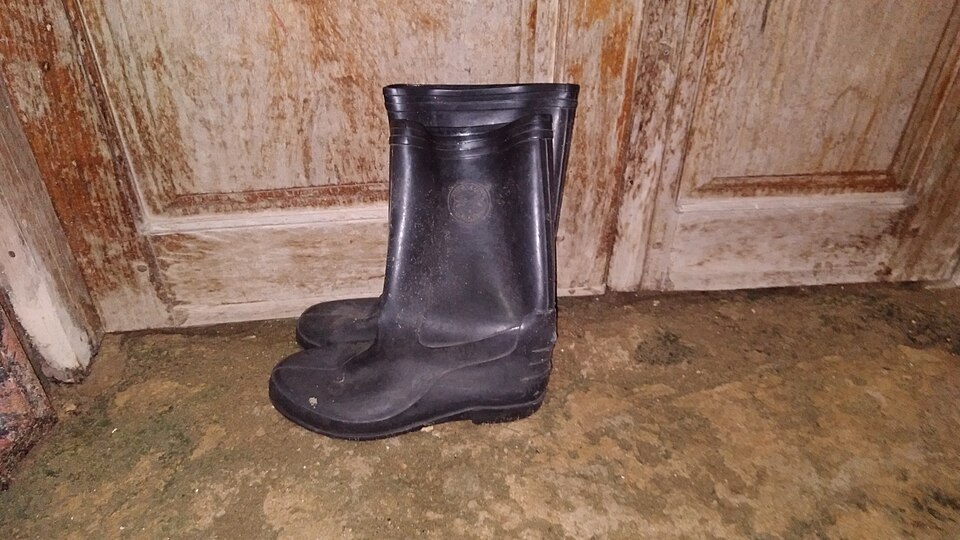
Overview
Wellington asked his shoemaker to modify the Hessian boot — a tasselled, knee-high military boot — into something plainer that would work under the narrow trousers then coming into fashion: the tassels went, the top was cut lower and straight, and the leather was made close enough to the leg to disappear under trousers. The result was worn for riding and for town, and its popularity followed the Duke’s after Waterloo, which is why the name stuck to a shoemaker’s alteration.
How it is worn
The leather boot is pulled on over a stocking and worn under the trouser, which is the arrangement it was cut for. The rubber version is pulled on over anything, kept loose so it can be got off wet, and often worn with the trouser tucked in — the opposite of the original. What both share is that there is no fastening at all: the boot is held by its shaft and comes off by pulling, which is what makes it quick and what makes a badly-fitting one fall off in mud.
History
Vulcanised rubber changed the object. Hiram Hutchinson bought the patent rights for footwear from Charles Goodyear and began making rubber boots in France in 1853, and the British firm that became Hunter followed; the First and Second World Wars put rubber boots on soldiers by the million and sent them home into farm and garden use. The name travelled with the shape rather than the material, and ‘wellies’ now means the rubber boot to almost everyone who says it.