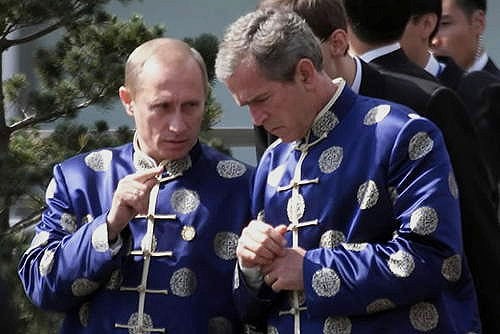
Overview
It descends from the Qing magua, the short riding jacket, and keeps its mandarin collar, its centre opening and its frog fastenings, while dropping the wide sleeve and the loose body for a tailored fit. Silk brocade with a repeating roundel — often the character for longevity or double happiness — is the common cloth, in red, black or gold. Nothing about it is old in construction: it is a twentieth-century garment quoting a nineteenth-century one.
How it is worn
It is worn straight over a shirt, buttoned to the neck or left open at the top, with trousers rather than a robe, and it is a jacket in use — put on for a wedding, a new year dinner, a state occasion — rather than a full costume. The frogs are fastened from the top down and the collar sits closed against the throat, which is what gives the upright line the garment is worn for.
History
The name means ‘Tang dress’ and is a nineteenth-century overseas-Chinese usage — Chinatowns being ‘Tang people’s streets’ — rather than a reference to Tang-dynasty clothing, which is a common confusion. The 2001 APEC photograph made it a national dress overnight and set off a decade of argument about whether it, the qipao, the zhongshan suit or hanfu should hold that role. It is now standard formal wear for weddings and new year, and one of the terms in that argument rather than its winner.