Overview
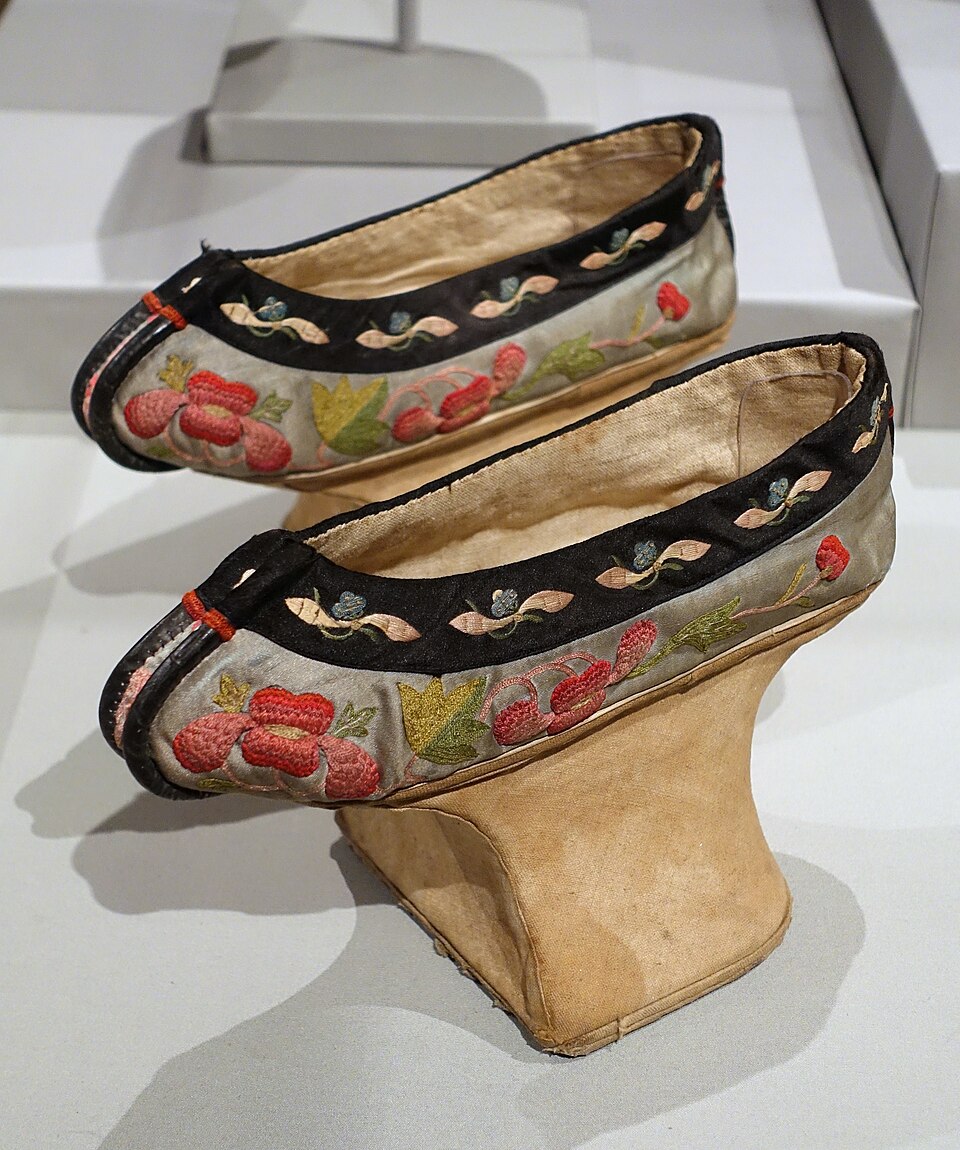
The upper is a flat silk slipper, embroidered and often beaded, and the whole shoe stands on a wooden block five to fifteen centimetres high, whitewashed and centred under the instep rather than under the heel. Two shapes are named: the flowerpot, wider at the ground than at the sole, and the horse-hoof, narrower at the ground. The block is not attached at heel and toe, so the foot rocks on a single support.
How it is worn
The wearer walks slowly with short steps and the arms held slightly out, because balance on one central block is genuinely difficult; the swaying that resulted was admired and imitated. They were worn by Manchu women of the court and banner households from adolescence, with the long straight chenyi robe, whose hem the height keeps clear of the ground. Older women and servants wore flat shoes.
History
Manchu women did not bind their feet, and the Qing court forbade the practice among bannerwomen, so the platform shoe developed as the marker of a Manchu lady the way the bound foot marked a Han one. Both did the same social work — a restricted, unhurried walk that showed the wearer did no labour — by opposite means. They vanished with the Qing court, and are known now from museum collections and from historical television, which is where most people meet them.