Overview
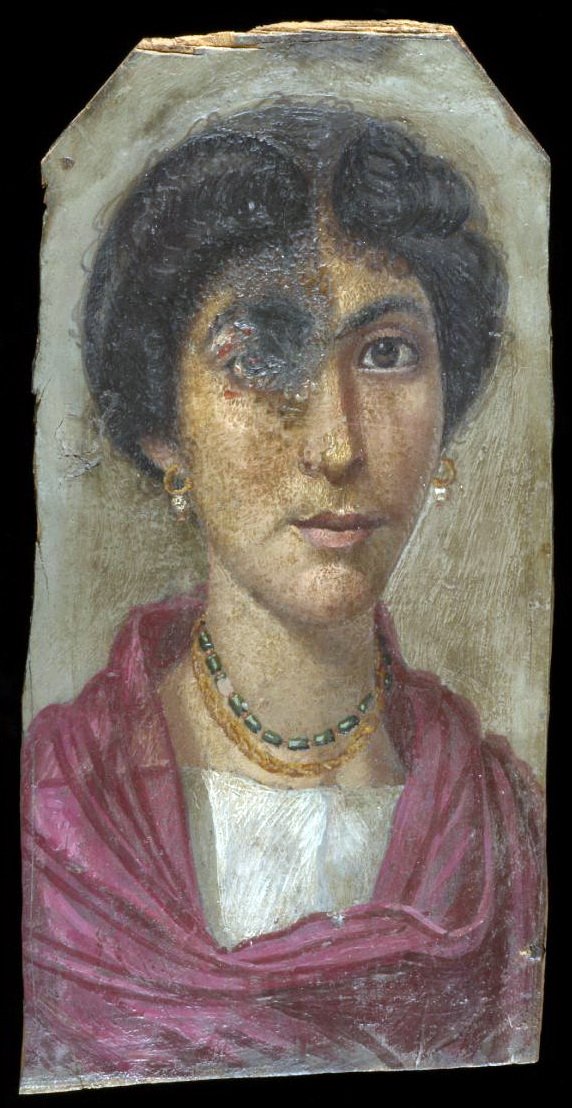
Roman Egypt gives us something no other ancient province does: faces. The Fayum mummy portraits — painted panels set over the wrapped body — show individual people in the clothes, jewellery and hairstyles they actually wore, dated closely by the Roman hairstyles they copy. It is the best surviving evidence for everyday Roman-era dress anywhere in the empire, and it exists because Egyptian burial practice preserved it.
Key garments and style
The ordinary garment was the tunic, worn belted, with a mantle over it; both were commonly woven to shape in one piece rather than cut and sewn. Tunics carried woven decoration in purple or dark wool — the vertical clavi running from the shoulders, and roundels and panels at the shoulder and hem. This is the tradition that becomes what museums label Coptic textiles, and Egypt’s dry ground has preserved thousands of examples, so the actual cloth survives alongside the paintings of it.
The portraits also record what was worn with the clothes: gold chains, ball earrings and hoops, wreaths, and hair dressed after the fashion of the Roman court, which is how they can be dated. Beneath the Roman surface the burial itself remained thoroughly Egyptian, so a single object often carries a Greek-style painting, Roman dress and a pharaonic funerary purpose at once.
Transition
The Arab conquest of 641 brought new dress and a new ruling language, though the weaving tradition of the tunic bands continued in Egyptian workshops well into the Islamic centuries.