What it was
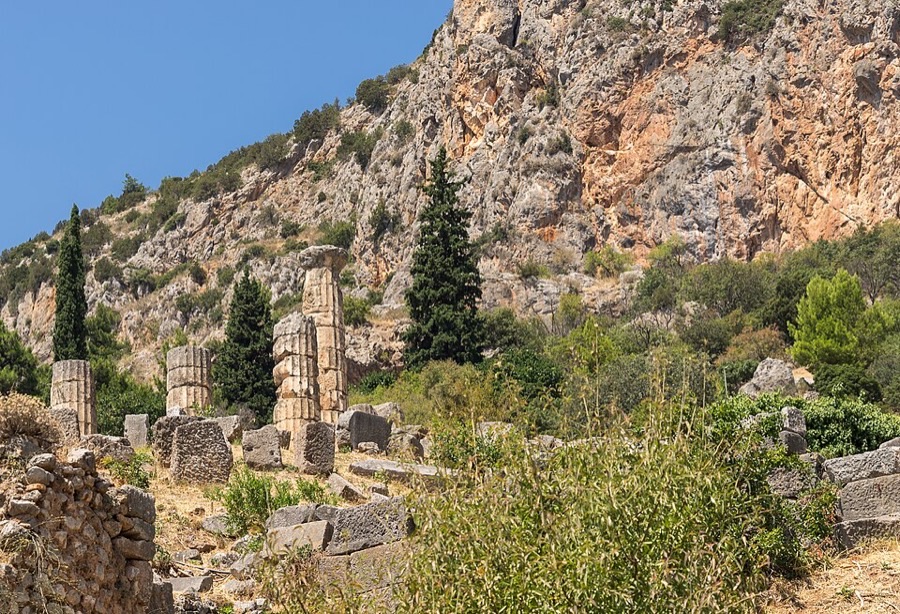
Delphi was the sanctuary of Apollo on Mount Parnassus, active from around the 8th century BC as the most influential oracle of the Greek world. The Pythia, a priestess seated on a tripod, delivered Apollo’s responses in a trance, and priests rendered them into answers famous for their ambiguity — Herodotus tells of Croesus, promised that a great empire would fall if he attacked Persia, who destroyed his own. The Greeks regarded Delphi as the navel of the world, the omphalos, and the omphalos stone still survives. Research since 2001 suggests that intoxicating gases — ethylene among the candidates — may have risen from bedrock faults beneath the temple, a debated hypothesis for the trance.
Role
Individuals and states alike consulted the oracle on colonization, law, and war; Sparta’s constitution and countless colonies claimed Delphic sanction. The maxims urging self-knowledge and moderation — know thyself, nothing in excess — were inscribed at the temple. Authority brought wealth: treasuries built by the cities lined the Sacred Way, the sanctuary hosted the Pythian Games, and Sacred Wars were fought over its control.
Fate
The oracle declined under Roman rule. The last recorded oracle, lamenting the fallen hall of Apollo, is associated with the era of the emperor Julian (c. 362), though its authenticity is doubted. The sanctuary closed with the anti-pagan edicts of the late 4th century under Theodosius I. Delphi is today a UNESCO World Heritage site, and the oracle remains the archetype of prophecy in Western culture.