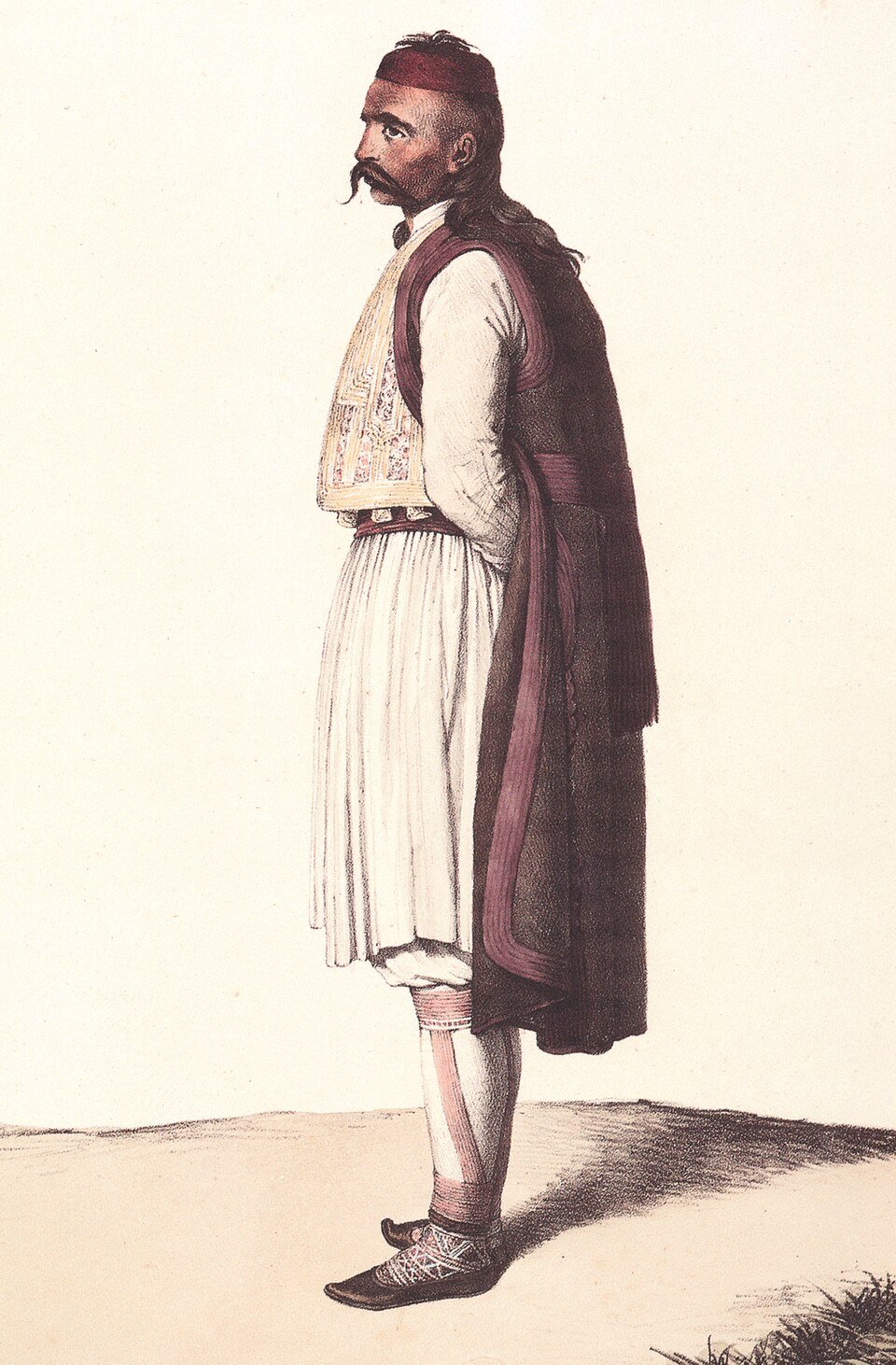
Overview
Four centuries of Ottoman rule produced the clothing most people now picture as traditionally Greek. That is worth stating plainly: the fustanella and the embroidered regional dress are not survivals from antiquity but developments of the Ottoman period, shaped by Balkan and Turkish forms as much as by anything local.
Key garments and style
The man’s costume of the mainland is the fustanella, a white pleated skirt worn over leggings with an embroidered waistcoat and a short jacket, its pleating a mark of status by sheer quantity of cloth. Island and coastal dress is different again, with the baggy vraka trousers of the Aegean showing how much regional variety the word Greek covers. Women’s dress was regional to the village: the heavy woollen karagouna of Thessaly, embroidered chemises and coin-hung headdresses elsewhere, with the embroidery patterns and colours identifying not just a district but often a woman’s age and marital state.
Urban dress in the towns followed Ottoman fashion, and the wealthy Greek families of Constantinople dressed much as their Ottoman peers did. Sumptuary rules applied: as non-Muslim subjects, Greeks were at various times restricted in the colours and furs they could wear, so dress registered legal status as well as locality.
Transition
During and after the War of Independence this village clothing was promoted into a national costume — the fustanella became court dress under King Otto and later the uniform of the Evzones — which is how a regional working garment ended up as a symbol of the nation.