What happened
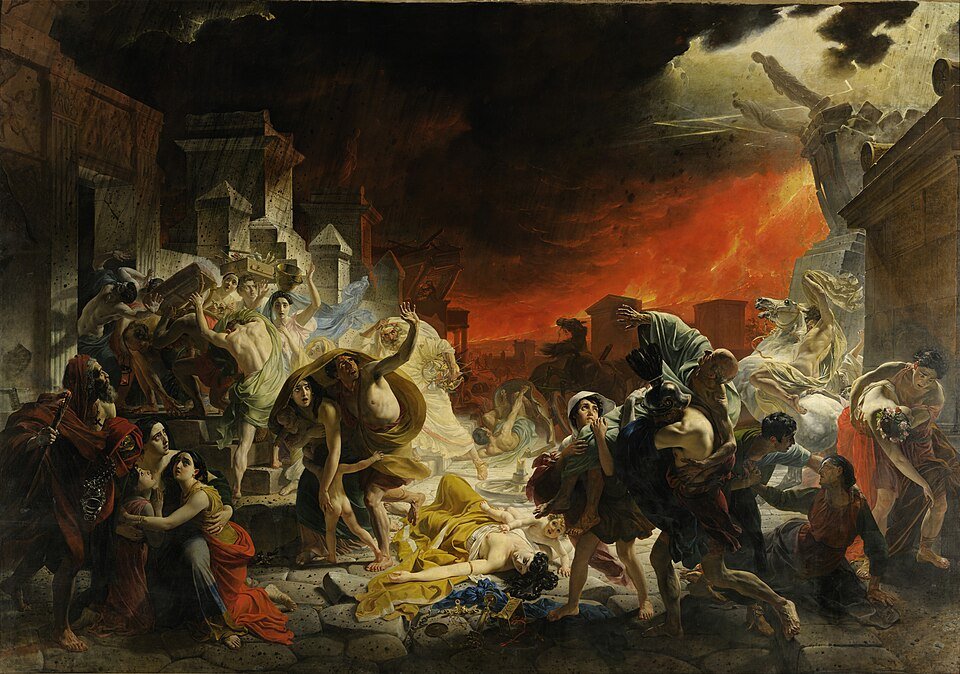
The traditional date is 24 August, but a charcoal inscription uncovered at Pompeii in 2018 is dated to 17 October, and the autumn fruit and heavy clothing found in the ruins point the same way. The eruption came in two parts. For some eighteen hours a column of ash and pumice stood perhaps thirty kilometres high and rained stone onto Pompeii until roofs gave way; then the column collapsed and sent surges of hot gas down the mountain, which reached Herculaneum first and killed almost instantly. Pliny the Younger watched from across the bay and wrote the only eyewitness account there is, in two letters to Tacitus composed some twenty-five years later.
Background
The Bay of Naples was prosperous and densely settled. Pliny the Younger described the eruption and the death of his uncle Pliny the Elder in letters, so such eruptions are now called Plinian. The year AD 79 is firm, but the traditional day of 24 August is debated, with some evidence pointing to autumn, so the day is uncertain.
Consequences
Thousands died, but the ash preserved the towns in extraordinary detail. Their excavation from the 18th century opened an unmatched window into Roman daily life, and Pompeii is a major archaeological site today.