What happened
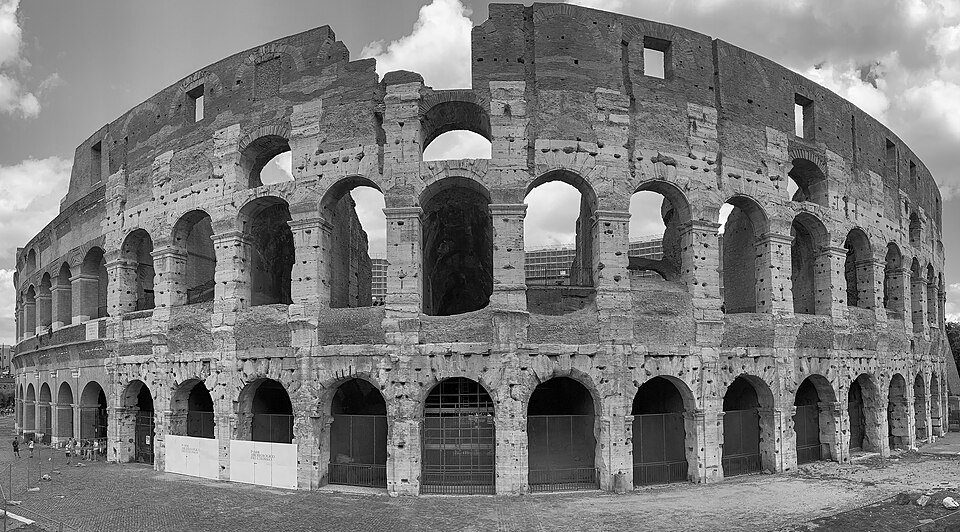
Vespasian began it on the drained lake of Nero’s Golden House, which was an act of politics as much as of building: it handed back to the city the ground an emperor had taken for a private palace. Titus opened it in AD 80 with a hundred days of games, and Domitian finished the top storey. It held something like fifty thousand people, who came in through eighty numbered arches carrying tokens that matched a tier and a seat, and were shaded by an awning worked from the parapet by sailors brought in from the fleet at Misenum.
Background
It was begun under the emperor Vespasian and inaugurated by his son Titus, funded partly by spoils from the Jewish War. The largest amphitheatre of the Roman world, it held on the order of 50,000 spectators, though estimates vary.
Consequences
It hosted gladiatorial games, beast hunts, and public spectacles for centuries. Later damaged by earthquakes and quarried for stone, it survives as an icon of Rome and Roman engineering and a major monument today.