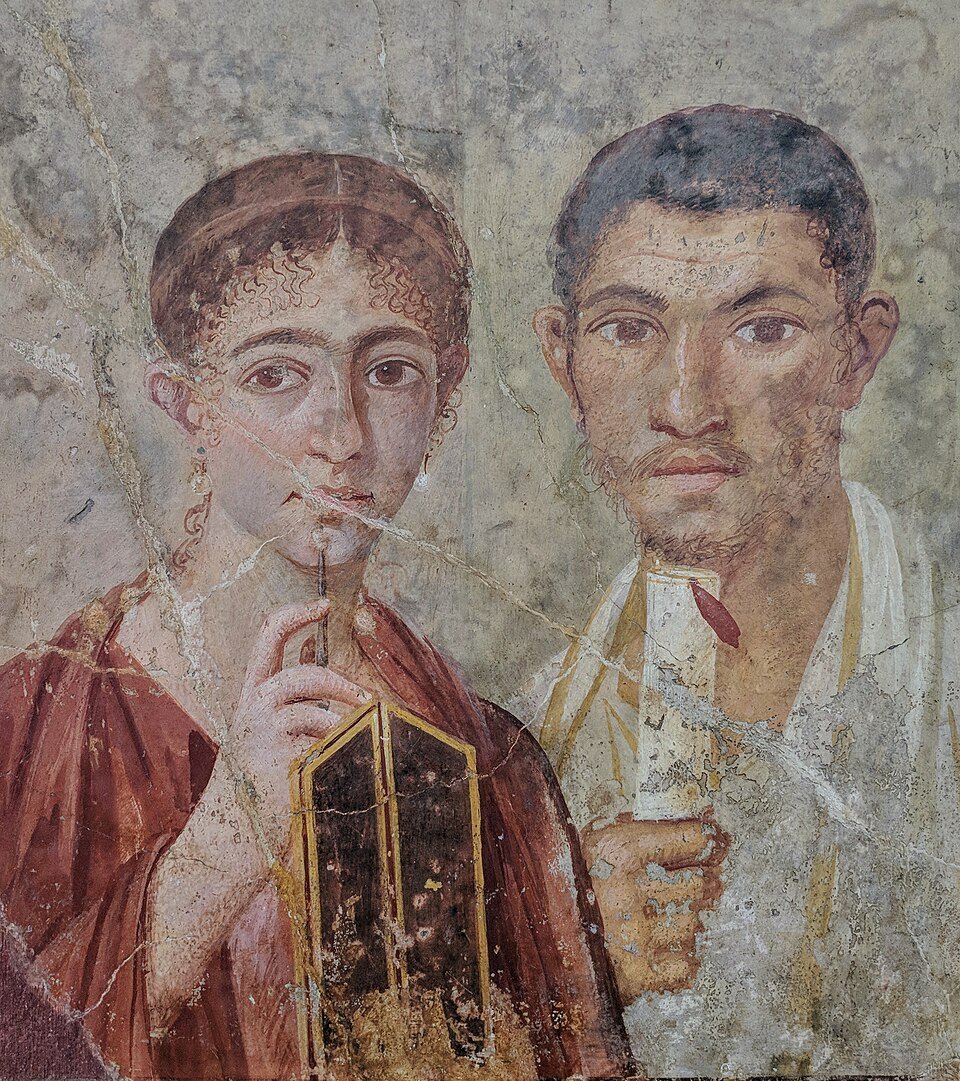
Overview
Under the Empire the toga stopped being clothing and became costume. It grew so large and so awkwardly draped that it needed help to put on and could not be worked in, so it retreated to ceremony, the courts and the emperor’s presence, while the tunic did the actual job of dressing the Roman world. Emperors legislated to keep it in use, which is what a garment needs when nobody wants to wear it.
Key garments and style
The tunic was the universal garment, belted, worn in layers in cold weather, and marked with clavi — vertical bands running from the shoulders whose width signalled rank. Women wore the stola over a tunic and the palla as a mantle outdoors, though the stola too became archaic and ceremonial. From the second century the dalmatica, a wide-sleeved tunic pulled on over the head, spread across the empire and eventually displaced the draped garments altogether.
Colour and fibre did the signalling. Wool and linen were ordinary; silk arrived through Parthian and later Persian hands at enormous cost, and Roman writers moralised about it steadily, Seneca complaining that silk garments protected neither the body nor modesty. Purple from murex was the most expensive dye in the world and became progressively restricted to the emperor.
Transition
As the western Empire dissolved, the tunic and the dalmatica carried straight into early medieval and Byzantine dress, and the toga survived only in the consular robes and in the vestments of the Church.