Overview
For about a century Italy set European dress, and it did so because it made the cloth. Florence, Venice, Milan, Genoa and Lucca produced the silks, velvets and cloth of gold that courts elsewhere had to import, so Italian fashion and Italian manufacture were the same phenomenon.
Key garments and style
Women wore the camicia, a fine linen shift, under a gamurra, and over that on formal occasions the giornea, an open overgown. Men wore the doublet with hose and a short overgarment. Sleeves were separate items, laced on and interchangeable, so a wardrobe could be recombined and sleeves given as gifts in their own right.
Slashing — cutting the outer fabric so the shift is pulled through in puffs — made an ostentatious display of having enough cloth to cut into. Headwear ran to elaborate constructions such as the balzo.
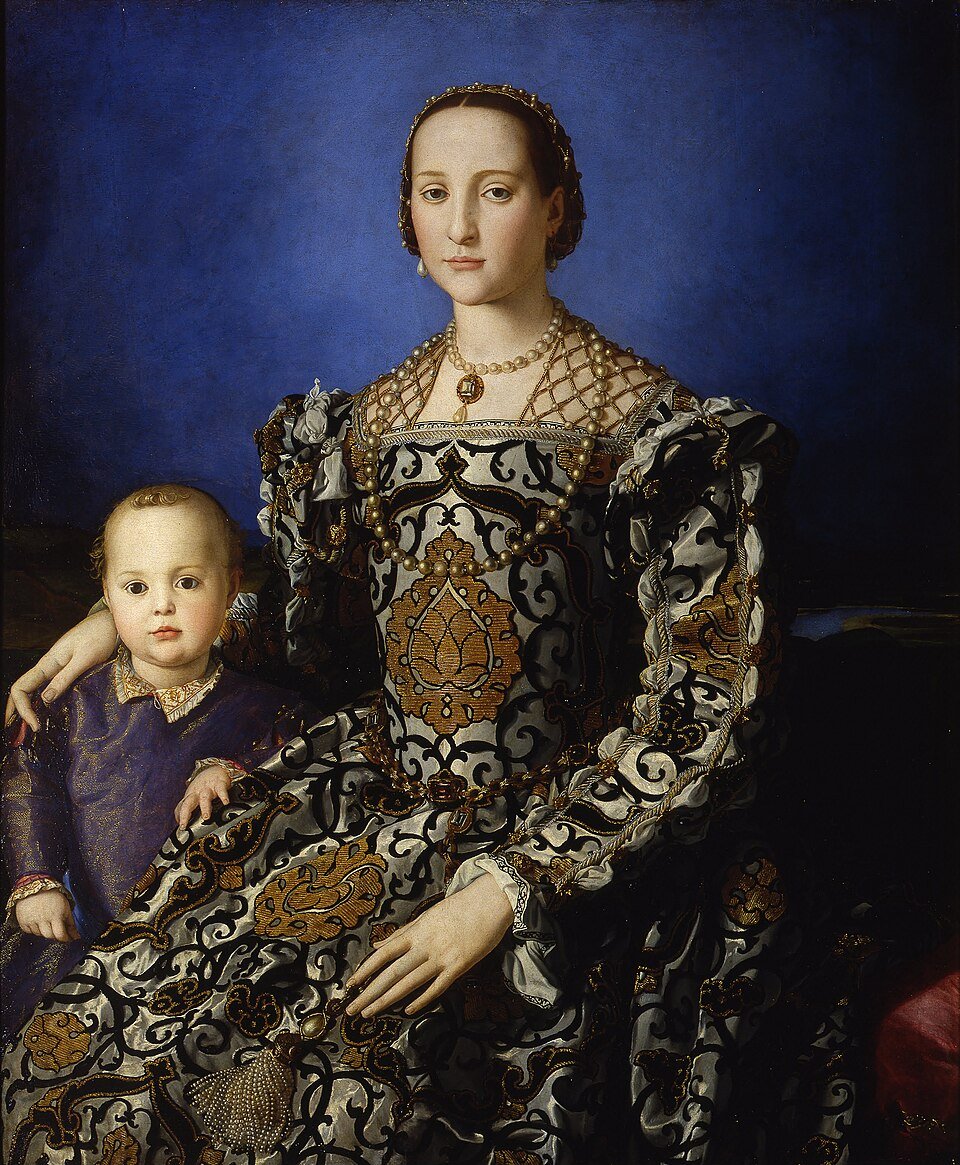
The finest textiles carried large-scale pomegranate and thistle patterns in cut velvet and gold loops, so expensive that they appear as inventory items in wills. Portraits are the record: Eleonora di Toledo’s gown, painted by Bronzino, is the best-known single garment of the century.
Venice and Florence legislated against all of it, repeatedly and ineffectually.
Transition
Spanish political dominance brought a stiffer, darker style through the courts from the mid-sixteenth century, and the initiative passed north and west.