Who they were
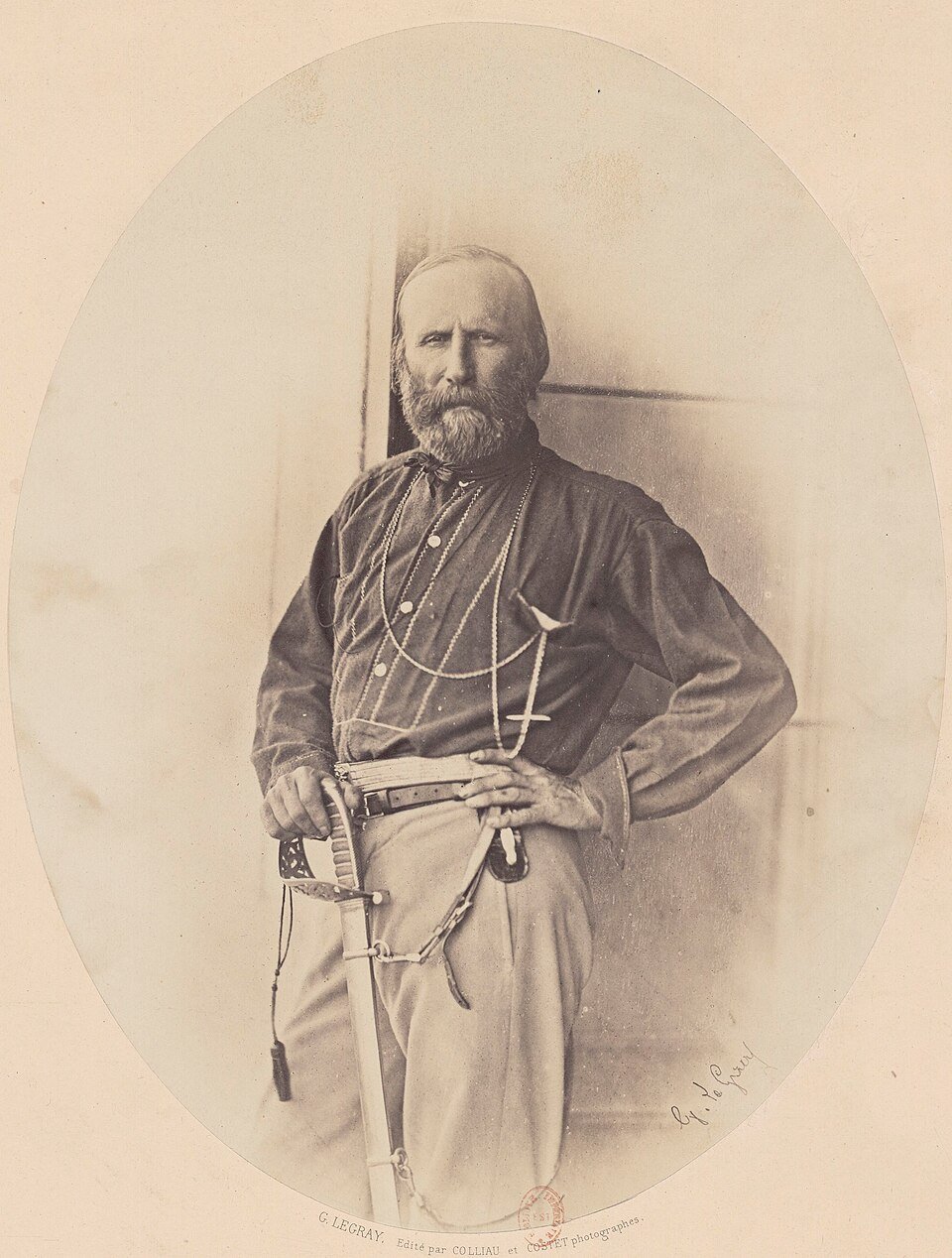
He was born in 1807 in Nice, then a Sardinian port, and went to sea as a merchant sailor. A death sentence for his part in a failed Mazzinian mutiny at Genoa in 1834 sent him to South America, where he fought for twelve years in Brazil and Uruguay and took for his men the red shirts of the Italian Legion at Montevideo — the uniform that followed him home. He returned in 1848, defended the short-lived Roman Republic, lost his wife Anita in the retreat through the marshes near Comacchio, and spent years in exile, part of them making candles on Staten Island, before settling on the rocky island of Caprera.
What they did
After years of guerrilla fighting in South America and Italy, he led the Expedition of the Thousand, the Redshirts, in 1860, conquering Sicily and Naples. He then handed them to King Victor Emmanuel II to help form a united Italy.
Legacy
Celebrated as a “hero of two worlds” and a symbol of the Risorgimento, he became one of the most admired figures of 19th-century nationalism. Countless streets and squares in Italy bear his name.