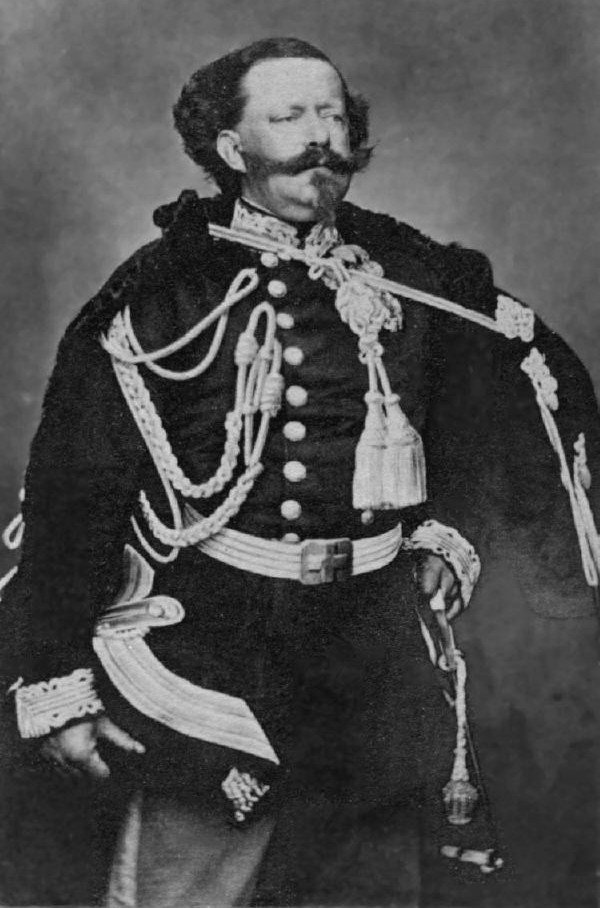
Who they were
He was born in Turin in 1820 and came to the throne in March 1849, when his father Charles Albert abdicated after the defeat at Novara. Alone among the rulers of the Italian states he kept the constitution granted the year before instead of revoking it, which earned him the name of the gentleman king and made Piedmont the refuge of exiles from the rest of the peninsula. When Italy was proclaimed he kept his Sardinian numeral rather than starting again as Victor Emmanuel I — a detail his critics read as the new kingdom being an enlargement of Piedmont rather than a new state.
What they did
With Cavour as his minister and Garibaldi’s conquests, he was proclaimed King of Italy in 1861. Venetia was added in 1866 and Rome in 1870, completing unification with Rome as the capital.
Legacy
Called “Father of the Fatherland,” he gave his name to monuments across Italy, and his reign established the Savoy monarchy over the new nation-state.